The God Who Answers - Part 2
Ministries > Unlimited Grace with Bryan Chapell
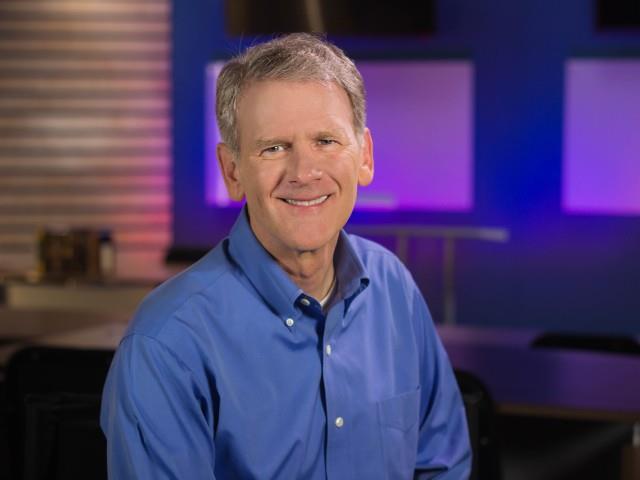
Pastor Bryan shares the second half of a lesson from Psalm 4. As we dissect the heavy portions of this text, Dr. Chapell directs our attention to God’s love and protection amidst trials and dangers.
Bryan Chapell: There are those who look at our lives, that look at their lives and say, "Where is God?" If this is going on, but the right, the claim of believer is to say, "Lord, show me your face." Show me the light, show me what you are still doing. Let me perceive that there is something greater than myself at work here.
Announcer (Male): So glad you joined us for today's Unlimited Grace, the audio broadcast ministry of pastor and author Bryan Chapell. In today's episode, Pastor Brian shares the second half of a lesson from Psalm 4. As we dissect the heavy portions of this text, Dr. Chapell directs our attention to God's love and protection amidst trials and dangers. You can find this lesson and many others when you visit unlimitedgrace.com. And while you're there, look for Pastor Brian's book, The Multigenerational Church Crisis. This compelling book asks the question of the church, "What could be accomplished in the name of Christ if we could better understand each other?" Let's hear now from Dr. Bryan Chapell, as he shares the second half of the lesson, The God Who Answers.
Bryan Chapell: Would you look in your Bibles at Psalm 4? "Answer me when I call, O God of my righteousness. You have given me relief when I was in distress, be gracious to me and hear my prayer. O men, how long shall my honor be turned into shame? How long will you love vain words and seek after lies?" Selah. And just a quick reminder, the Selahs are musical notation and the end of a thought, virtually an amen planted within the Psalms. Verse 3, "But know that the Lord has set apart the godly for himself. The Lord hears when I call to him. Be angry and do not sin. Ponder in your own hearts on your beds and be silent. Selah. Offer right sacrifices and put your trust in the Lord. There are many who say, 'Who will show us some good?' 'Lift up the light of your face upon us, O Lord.' You have put more joy in my heart than they have when their grain and wine abound. In peace, I will both lie down and sleep. For you alone, O Lord, make me dwell in safety." The things that I'm going to say for the next few minutes, I'm going to acknowledge to you, are the deep mines of faith. That this is not on the surface of of of just sacrin Christianity, of sentimentalism. This is this is deep down stuff as we are trying to find the reality of God in our lives by claiming who he really is and what he has really done. If it's that kind of God that we are seeking, then we claim him even in the distress, first of all, by trusting his hedge about us. Verse 3, right at the beginning. "But know that the Lord has set apart the godly for himself." He has set apart his own. He has intention for them that is eternal and good. But I confess, and you do too, that there is enough in a broken and fallen world that would make us question that at times. That there truly is a set-apartness of God's people for his eternal purpose, that there is a hedge about us. When Kathy and I were in England two weeks ago in in a retreat center, a conference center that was in the rural parts of London, we had the opportunity just to take some hikes and we we went through the fields where there are those, you know, those noteworthy hedges in the European fields. The the hedges, remember, in the Battle for Normandy even kept the allied tanks from being able to make progress because because the hedges were so thick and so dense. They hadn't just been planted 10 years before or 20 years before, those French hedgerows had been planted by the Romans 2,000 years before. So that even tanks could not penetrate them. But what if the hedges about us had not been planted 20 years ago or 2,000 years ago, but before the foundations of the world were laid? Remember the words of Jeremiah, "I have loved you with an everlasting love." With loving kindness I have called you, I have set you apart, and that that understanding of God's love setting apart for eternal purpose with eternal ways is reminding us of the importance of believing in the hedge that accomplishes two things: it keeps us from going out into danger as well as keeping danger coming into us. The notion of a hedge about us keeping us from going out into eternal danger is expressed so poignantly in the Book of Hosea. Do you remember Hosea, the minor prophet, whom God said, "I want you to take as your wife a prostitute to show how great is not only the righteousness but the forgiveness of God." And then after Hosea took Gomer as his wife, she continued to go in adultery after other men. And God said to Hosea, "Take her back despite her repeated adulteries, for such is the love of God for Israel." I want you, my spokesman, to show truly how great is my love. But right in that same chapter, there is an amazing promise of what God would begin to do in Gomer, the prostitute wife's life. God says in verse 6, "I will hedge her up. I will hedge her way with thorns, and I will build a wall against her so that she cannot find her paths. She shall pursue her lovers, but not overtake them, and she shall seek them, but not find them." It is the blessed, difficult experience of virtually everyone who's been a Christian for any length of time. That we recognize there are those moments in our lives when we have planned, when we have headed toward the evil, the wrong, the temptation. And we knew it was there, and we made the plan for it, and through miraculous means, whether the the time changed, or the traffic changed, or or the opportunity changed, that God put a hedge around us so that we could not get to the very sin that we were pursuing. It's it's part of God's plan, and we say, no, there are certain things in my life, I know, but but God is looking for eternal things and for that which has eternal consequence in our lives. He has put a hedge about his people so that we can go out into that danger that would create eternal consequences. But the hedge operates the other way too, from eternal danger not entering our lives. You know the words of the psalmist, "The Lord is my refuge and my fortress." By a deep commitment of faith, we believe that nothing enters our lives but that God intends to work it for good. All things work together for good to them that love God and are called according to his purposes. When I believe that, I have lots of questions at times. Lord, did really nothing come into my life but such as you intended for my eternal good? And when we begin to say, "No, there's been some awful things in my life." But listen, if you are still here, if you are here today hearing me, there has been a hedge about you, or you would not be here. The truck, the car, the disaster, the disease, the virus, it would have already got you. If you are here, you look back and say, "I don't understand all that's come in, but I have profound and deep faith that God has been good to me, and that there is a hedge about me." And because I believe there is a hedge about me, barring me from the worst of eternal consequence and keeping the worst of eternal things from coming into my life, I begin to trust his hearing. I mean, that's what's actually being expressed at the end of verse 3. Not only has the Lord set the godly apart, the Lord hears when I call to him. Now that that's a matter of faith too, because when you're in the church, if you're receiving good instruction, you know that simply because we ask God for something does not mean he provides that very thing. I'm not eternally wise, I I don't know what's right in every phase and aspect of my life. I still offer my desires to God. But but he knows far better than I what should happen, so the options of his response are yes, no, not yet, or exceedingly abundantly above all that you would ask or even think. As God is working all things together for good, he is working the intricacies and the complexities of the universe for the good of his people and the good of you. I I believe because there is a hedge about me, God hears me, and in hearing me, he is working for my eternal good, he is working for my spiritual security. And I receive that with with humility, I I trust the hedge, I trust his hearing. And for that reason, verse 4 stands before us. "Be angry and do not sin. Ponder in your own hearts on your beds and and be silent." I'm glad the verse is there, "Be angry and do not sin." Like there are things in our lives that are worth being angry at. This doesn't make sense. How could a good person, how could a daughter, how could a son, how how could somebody like my co-worker, so good, have have this difficulty, this struggle, this earthquake in their lives? And and to have a just cause for saying, "I don't understand this." But in the in the wonderful way in which scripture works, some of your Bibles will say this in the footnotes, that word for anger is just the word for trembling. Tremble, and and some translations actually translate it as as worship or reverence. Whatever it is, I'm trembling before it, and and yet I'm not cursing God. He's put a hedge about me, I believe that. I believe he hears me. And so there is a humble silence as I ponder upon my bed the greatness of God, the goodness of God even in the light of these circumstances. Do I even pray like Jesus, "Lord, here is my prayer, yet not my will, but your will be done." I I receive with humility what a sovereign and gracious God brings into my life, and I do that because I trust your hearing. Even though there's something in my heart that resists, that trembles, that may even be angry, I'm seeking to trust you through this. And the reason we do that is we trust his hand.
Announcer (Male): You're listening to Unlimited Grace. The audio broadcast ministry of pastor and author, Bryan Chapell.
Guest (Male): It may seem hard for younger Christians to believe, but people over 50 were raised during an era when 90% of Americans identified as Christian. These older believers were once part of a majority group that understood the mission of the church was to take control of our culture, to halt its evils. At the same time, Christians under 50 have lived their entire lives perceiving themselves as a minority that needs to make credible their faith to a secular pluralistic culture. These distinct experiences and perceptions have a profound impact on the priorities different generations have for church ministry. It's no wonder that younger and older believers don't always see eye to eye. In his new book, The Multigenerational Church Crisis, Dr. Brian Chapell asks the question, "What could be accomplished in the name of Christ if we could better understand each other?" This practical and hopeful book is backed by thorough research, revealing how to open the lines of communication, appreciate the experiences that shaped each generation in your church, and unite in one mission to impact your community and the world. You can request your copy of The Multigenerational Church Crisis when you donate online at unlimitedgrace.com or by calling 844-41Grace. That's 844-414-7223. And now, more from Bryan Chapell on today's Unlimited Grace.
Bryan Chapell: Not only do you trust that he's made a way, you trust the one whose name that you know and has been demonstrated to you. Offer verse 5, "Right sacrifices and put your trust in the Lord." In most of your Bibles, the word Lord there has all the letters capitalized, L O R D, every letter capitalized, which is the English translation of the Hebrew Yahweh. Reminding us the same Lord that has made a way by sacrifice that would culminate in the work of his son. That same Lord is Yahweh, the Lord Almighty. He is sovereign and savior. He is creator and care-giver. He is warrior and shepherd. He is all those things together, and because I believe it, because I believe he is sovereign and cares, because I believe he is warrior in my behalf and shepherd for my soul. I trust him, I turn to him, I turn to his hand, trust his hand as at work, that there is a hedge about me, that he hears me and that his hand is at work in my behalf. And I claim those truths, even in the midst of the crisis, even in the distress, as I'm calling out to God, I claim the reality of who you are, the one who puts a hedge about me for eternal purposes, the one who hears my prayer and whose hand is at work in my behalf. And if that is the case, if I have approached God that way, what what ultimately become the consequences, I begin to look for his light in my life, even in the dark hours, even in the worst nightly storm. I I begin to look for his light to shine. Because that's my privilege as a believer. That light is expressed in verse 6. "There are many who say, 'Who will show us some good?' 'Lift up the light of your face upon us, O Lord.'" There are those who look at our lives, that look at their lives and say, "Where is God?" If this is going on, but the right, the claim of believer is to say, "Lord, show me your face." "Show me the light, show me what you are still doing, let me perceive that there is something greater than myself at work here." It's what happened to Stephen, of course, when he was being stoned for the profession of his faith, and even in the stoning, he had the heavens open before him and he saw the Son of God sitting beside God in his glory. "Lord, show me your face, this is awful!" But if you show me your face through it, I continue to believe that the hedge is about me, and that you're hearing, and that you're working for eternal purposes. It's what the psalmist is praying for. And we, people of faith, have to remember that over and over again, that God's goodness is not marked by the circumstances, but by the destination. He is working eternal purposes in a complex, broken world with complex, broken people. Who who would not necessarily listen or hear or respond, were it not for the crises that come that call for us to look for a Christ. "I need a redeemer, I need somebody, some way out of this mess." We, of course, recognize that so often the things that come into our lives that that we believe are the terrible circumstances that that create the the detours and the distractions from our destination. Are so often not detours or distractions to God at all, but the means by which he is taking us on the scenic tour. And we begin to see things in our lives and even through our hurts that we would never have understood about the magnitude and the majesty and the intimacy of the care of God. Is it not often in your darkest moments that God seems closest, that you have to call out to him, that there is no other way to go? And in that moment, the reality of God becomes so intense that you say, "Thank you, God, for the scenic tour." By which I would not have understood you or seen you or even treasured you, had this path not been put before me. We need to look for the light outside the circumstances. But we also need to look for the light inside, to actually begin to see the darkness through the light that God has put inside of us as well. Verse 7, "Lord, you have put more joy in my heart than they have when their grain and wine abound." Paul speaking of his adversaries is saying, "Their silos are full, my heart is full." And if my heart is full, if I have the knowledge of this God who puts the hedge about me, who listens to me, who has eternal purposes in play, even in the hard stuff, even in the mess that I have made. If I believe in that kind of God, then I begin to see the darkness through the light that comes from inside of me. And that light from the inside is the joy that changes everything we see, everything we experience. How does that happen? Dietrich Bonhoeffer in 1933 tried to explain to the people of his church, why the nation with with full support and commendation was turning to Hitler. How was that happening? How could they not see everything they needed to see? He said in a sermon, "Imagine there is a boat at high seas fighting the waves. The storm wind is blowing harder by the minute. The sailor's strength is failing." "And then he is gripped by another presence in the boat. No one has been there before, but now there is another presence in the boat. What is it? Who is it? Someone is in the boat who grabs him. Never there before. Suddenly the sailor can't see the wind, can't fight the waves. He's totally distracted by the presence that's in the boat. Finally he shrieks out, 'Who are you?' And the voice responds, 'I am fear.' And there is no hope because fear is in the boat." We understand. We understand how we can be in life's circumstance, and when fear grabs us, we cannot think or do anything but focus upon the fear. It's got us. But what if what if it were not fear? What if you could replace that that eclipsing emotion of fear with another emotion? Like joy. What if joy grabbed you and began to eclipse everything else, the winds are still blowing, the waves are still crashing over the bow, but but joy has grabbed you? You say, "Well, that's not likely to happen." It will if Jesus is in the boat. And that's what we're being told, not just that Jesus is in the boat, but his Holy Spirit is in us. That indwelling us is the very Spirit of God so that in the circumstances which are physical and external, we have the ability to perceive them from the realities of God's Word and the eternal perspective of a sovereign, savior, shepherd, king. Jesus is in the boat with me. And because Jesus is in the boat with me, and I perceive the reality of it because his spirit is in me, telling me the truth of this word, convincing me the reality of the hedge, convincing me the reality that he hears, that he's working all things together for good, that has a profound effect upon me. And that effect is verse 8. "In peace, I will both lie down and sleep, for you alone, O Lord, make me dwell in safety." If if the joy is in me so that I begin to perceive the world in in all of its brokenness and hurt and darkness through the lens of that joy, what's the consequence? We can sleep. And sleep is not just permitted, do you recognize it's being instructed here? That it is actually an act of worship. "I will both lie down and sleep for you alone, O Lord, make me dwell in safety," that that my sleep is an acknowledgment of the greatness of my God who is near. In our in our family, after years of our children struggling to have children, and now we have babies in our lives again, so we're remembering things about babies. One of the things we're remembering about babies is that there are times that the slightest tiptoe will wake them up. Just just getting out of your chair to leave the room will creak in such a way they wake up. You know, they they super sensitive hearing sometimes. But there are other times when the family has gathered and is laughing and raucous and loud, and a baby in its mother's arms just sleeps through it all. "I'm safe," something in them says. "I'm in my mother's arms. And I can sleep through this because I am held so well, tightly and safely." What our God does, he gives us permission to approach him, to ask him, and then to sleep on it. May God give you sleep as an act of worship. The sovereign, savior, warrior king, he's got it. You can sleep. Sleep to honor him.
Announcer (Male): That's Pastor Bryan Chapell, and you've been listening to Unlimited Grace. If you've been blessed by this message and would like to hear more from Dr. Chapell, I would encourage you to visit unlimitedgrace.com. Please be sure to join us next time as once again, we endeavor to put Christ at the center of our efforts so that lives might be transformed by his unlimited grace. This ministry is brought to you by Unlimited Grace Media and continues to be made possible with your generous financial support.
Related Episodes
The God Who Answers - Part 1
Thursday, July 9
A 7-11 Song - Part 1
Tuesday, July 7
Remembering Dust - Part 2
Monday, July 6
About Unlimited Grace
Unlimited Grace is dedicated to spreading the gospel of God’s grace to all people. We desire for believers everywhere to serve God through faith in His grace that frees from sin and fuels the joy of transformed lives.About Bryan Chapell
Bryan Chapell, Ph.D. is the Stated Clerk Pro Tempore of the Presbyterian Church in America (PCA), based in Lawrenceville, GA.
Dr. Chapell is an internationally renowned preacher, teacher, and speaker, and the author of many books, including Each for the Other, Holiness by Grace, Praying Backwards, The Gospel According to Daniel, The Hardest Sermons You’ll Ever Have to Preach, and Christ-Centered Preaching, a preaching textbook now in multiple editions and many languages that has established him as one of this generation’s foremost teachers of homiletics.
Dr. Chapell is passionate about sharing the truth of God's grace with others, because it provides the freedom and fuel for transformed lives of joy and peace.
He and his wife, Kathy, have four adult children, a growing number of grandchildren, and lives rich with friends, fishing and faith.
Contact Unlimited Grace with Bryan Chapell


