The God Who Answers - Part 1
Ministries > Unlimited Grace with Bryan Chapell
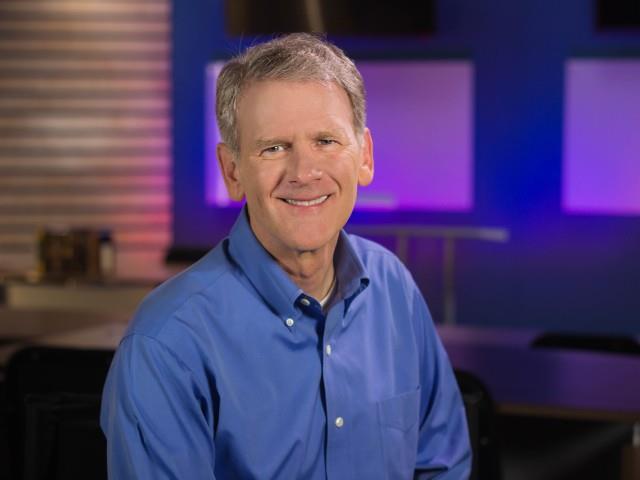
Pastor Bryan shares a lesson from Psalm 4. Dr. Chapell points to our need for God’s help, and the Lord’s faithfulness to answer us in our distress.
Bryan Chapell: God, hear my prayer. God, work in my life, and God is simply giving us permission to make that prayer, that we can approach Him, that He's willing to listen. And as we do so, we recognize what the psalmist is saying is that we begin to claim the reality of who God is, even in the distress, even in the mess.
Guest (Male): So glad you joined us for today's Unlimited Grace, the audio broadcast ministry of Pastor and author Bryan Chapell. In today's episode, Pastor Bryan shares a lesson from Psalm 4. Dr. Chapell points to our need for God's help and the Lord's faithfulness to answer us in our distress. You can find this lesson and many others when you visit unlimitedgrace.com. And while you're there, look for Pastor Bryan's book, *The Multi-Generational Church Crisis*. This compelling book asks the question of the church, what could be accomplished in the name of Christ if we could better understand each other. Let's hear now from Dr. Bryan Chapell as he shares the lesson, *The God Who Answers*.
Bryan Chapell: The writer Patrick Morley gives us this short biography. He says, “When my dad turned six, he went to work. He went to work with his older brother. They rose every morning at 3:00 a.m. to deliver milk, and then after that, worked a paper route.” But despite the hard work, he never heard his father say, “I love you, son. I am proud of you.” When my dad became a man, he had to decide if he would repeat or break that cycle. He wanted to break the cycle, but fathering was unexampled to him. So our family joined a church to get some moral and religious instruction for the family. I suppose that's what my dad thought it meant to be a good Christian. But he was still left to guess at what it meant to be a good father. So after a while of church pressures, my dad burned out. He quit church. Soon after that, I quit high school in the middle of my senior year. My brother followed in my footsteps and eventually he died of a heroin overdose. My other brothers have had a variety of employment, substance, and marriage issues, too. My dad never saw it coming. If he could have seen around the bend, I'm sure he would have done things differently. If he was still alive, I know he would say, “I take full responsibility.” And I respect that. Every man does need to take responsibility for his life. And yet what the brief biography of Patrick Morley makes plain is taking responsibility may not be the real core issue. After all, almost all of us at some point are willing to man up and say, “If my kids struggle, they come by it honestly. They got it from me,” at least in some dimension. We recognize that we're not perfect. We will acknowledge the struggles. We will acknowledge that we have things that have made life difficult for ourselves as well as our families. And yet, even as we acknowledge all of that, the difficulty many of us face even in the moment is not taking responsibility after the fact, but asking for God's help in the midst of the mess. To at the moment begin to say, “I need some help. God, will you enter my life? Will you help me to deal with the things that I am struggling with?” Somehow the fear that we would show weakness, that acknowledging the need for help is going to diminish us in some way, keeps us from the things that are so obvious to others and ourselves when we look back. We keep saying, “No need for help. No need for God. No need for crutch. It's under control. I can do this myself. I got this.” Why do we do that? Because somehow we believe the expression of need is the confession of weakness. And over and over again, we know that what men in particular struggle with the most is anybody seeing us as weak. But if there's anything that this psalm does, it's allowing a hero of the Bible, David, the one who wrote it, to say, “It's okay to ask God for help.” Even in the midst of the mess, not just down the road somewhere, but even in the midst of the mess being willing to say, “I need my God to help.” And that is not diminishing us. That is actually expressing what it means to be a man or woman of faith. What is the psalm teaching us? When we're in the midst of the mess, when the distress is so intense, what are we being given permission to do? First, simply to desire God's presence in our lives. The opening words are so clear, “Answer me when I call, oh God of my righteousness, the inverse one. Be gracious to me and hear my prayer.” It's okay to want God involved in our lives. And as obvious as that may seem, it is not obvious in ancient times or often in our own times. After all, ancient hearts were not so different than our hearts today. Often if you were in the Hebrew culture, if you were struggling, if you were in a mess, then the conclusion of others and often of the person themselves was, “God's getting me.” The reason I'm struggling, the reason for this mess is somehow I am sinful, wrong, weak, and God is punishing. God is expressing His displeasure. And really the only explanation in the ancient Hebrew world for personal disaster or trouble or distress was, “God's getting you.” And so you don't want God close. You want some distance. You want to placate him somehow, put a fence between you and God. And yet what David is doing is saying, “I actually desire Him.” My heart and my flesh cry out for the living God. Why would we want such a God? Because He has declared Himself as one who is righteous. Did you catch it? Just the very first words, “Answer me when I call, oh God of my righteousness.” We need the words. He is the God of our righteousness. I don't stand before God expecting His goodness because I've been good enough, because I've qualified or I've measured up. No, it's not my righteousness that allows me to call out to God. It is His righteousness. It's the gospel in nutshell essence in the Old Testament, that God over and over again taught His people not to approach Him on the basis of their righteousness, but His. And ultimately, we would understand the goodness and the grace of that in the New Testament where Christ would come. He would suffer and die for our sins and His righteousness, as He took away our sin, would become ours. The great transfer, our sin for His righteousness, His righteousness for our sin. So that we could say with the apostle, “I am crucified with Christ and I no longer live, but Christ lives in me. I have His identity, and the life that I live now in the flesh, I live by faith in the Son of God, who loved me and gave Himself for me.” It's His righteousness that allows me to approach Him. And I don't simply trust His righteousness, I approach Him because I trust His record. Right in the middle of verse 1, “Lord, You have given me relief when I was in distress.” Why should I trust God? Because I'm trusting His righteousness, not mine, and because He's got some record of goodness in my life. We don't know precisely when David wrote this psalm. Was it after Goliath, in which God had helped him defeat the giant? Or was it after Saul, the king that became in essence his father in the palace, began to hunt him down in the desert like a dog? David was delivered. Did he look back and say, “God, You have given me relief?” Or was it even later than that? When Absalom, the son of David's heart, betrayed him, turned on him, and tried to kill his own father in order to have the kingdom? Did David look back across all of it and say, “God, when the worst things were happening, when I had no help, somehow You rescued me? My heart is still hurting, but God, I recognize You were the one that gave me relief.” Because he recognizes God's righteousness and God's record, he recognizes, “It's okay to call out to God. I want to hear His voice.” Not simply because I want God's voice in my life, because I want the other voices to stop. He doesn't just want God to hear, He wants the shame to end. The words of verse 2 hurt us if we hear them in the context of our own lives. “Oh man, how long shall my honor be turned into shame? How long will you love vain words and seek after lives? I was once esteemed, and now I am embarrassed.” And the people who are making my life difficult are men of rank. We don't see it so much in our English translations, but those opening words of the verse, “Oh man,” are men of record, men of rank, men of esteem. If a crazy person calls you crazy, no problem. But if the credible people call you crazy, now I'm worried. And not only are the credible people shaming him, they are doing it with vain words and lying. And as he hears it all, he is simply saying, “Lord, I need Your presence to drown these voices in my life.” We have to recognize as believers in this world that shame is not just something people do to us or we do to ourselves. It is the weapon of Satan, of the evil one. To drive us away from hope in God, to say, “I'm ashamed, I cannot go to Him, so I have to turn from God.” Or to make us hide from friends that we actually need to support us. Or to actually make us lose hope so the very gifts and graces God has put into our lives, we don't want to use anymore. Shame is what Satan himself uses to drive us from the purposes and the goodness of God's heart because we are denying them to our own heart as the shame fills our ears and we cannot hear the words, “Stop.” David says, “Lord, hear me. Let me stop hearing those voices.”
Guest (Male): You're listening to Unlimited Grace, the audio broadcast ministry of Pastor and author Bryan Chapell. It may seem hard for younger Christians to believe, but people over 50 were raised during an era when 90% of Americans identified as Christian. These older believers were once part of a majority group that understood the mission of the church was to take control of our culture, to halt its evils. At the same time, Christians under 50 have lived their entire lives perceiving themselves as a minority that needs to make credible their faith to a secular pluralistic culture. These distinct experiences and perceptions have a profound impact on the priorities different generations have for church ministry. It's no wonder that younger and older believers don't always see eye to eye. In his new book, *The Multigenerational Church Crisis*, Dr. Bryan Chapell asks the question, “What could be accomplished in the name of Christ if we could better understand each other?” This practical and hopeful book is backed by thorough research, revealing how to open the lines of communication, appreciate the experiences that shaped each generation in your church, and unite in one mission to impact your community and the world. You can request your copy of *The Multi-Generational Church Crisis* when you donate online at unlimitedgrace.com or by calling 844-41-Grace. That's 844-414-7223. And now, more from Bryan Chapell on today's Unlimited Grace.
Bryan Chapell: How does shame work? Charles Featherstone in the rather remarkable biography, *From Jihad to Jesus*, talks about the path of a California teen from the suburbs to Middle East Muslim jihad as a Muslim warrior. He describes how it happened, how the voices of shame began to motivate him because he couldn't turn them off. He says, “Due to my father's military career, we moved a lot. We settled in Southern California. It was not home. I had been on the receiving end of my father's violence for years, and I learned both to fear and to hate him.” “And school was no more safe. I was bullied, terrorized, and abused regularly, not just by my classmates but by a fifth grade teacher. There was no one to trust. I was frightened, incredibly alone, and increasingly angry.” The residual shame, he said, created in him a “God hunger.” Somebody who would receive him beyond the hurts and the shame of this world. And he found that God in Islam, where he learned of a God who cared for men, who would express their anger in courage. It all made sense to him, he said, as he was getting rid of the shame, until he was walking the streets of Manhattan on 9/11. And then he wrote what filled his heart. “In the chaos and terror as I looked up at the burning Twin Towers and watched people tumble to their deaths, life-changing words came to me. Words replacing the long-repeated voices of anger and shame. The words now inside my head, ‘My love is all that matters, and this is not who I am.’” The words of Sunday school teachers from a church that his parents had long ago abandoned. But still the words of Christ coming into his heart, coming into his mind, “I am love and I love you, and this is not evidence of who I am.” And suddenly everything began to change as the voice of Christ's love and His provision began to drown the voices of shame. But of course, for all of us, the question is, “How does that happen? How do we actually turn down the volume of the shame in order to turn up the message of grace that we also desperately need?” Because everything else is vying for the volume control. We recognize in our lives that we will turn to success, or sex, or accomplishment, or beating somebody up. Something to give us esteem or value. And the voices that keep echoing that drive us are the abuse that we have received or given. The careers that ended short or badly. The friends who abandon us. The families who have said things to us that we never imagined they would ever say to us. Those voices keep coming, keep coming, keep coming. And the shame that we so long to silence has to be silenced, but it can only be done in the grace of God. God, hear my prayer. God, work in my life, and God is simply giving us permission to make that prayer, that we can approach Him, that He's willing to listen. And as we do so, we recognize what the psalmist is saying is that we begin to claim the reality of who God is, even in the distress, even in the mess. The things that I'm going to say for the next few minutes, I'm going to acknowledge to you are the deep minds of faith. That this is not on the surface of just saccharine Christianity, of sentimentalism. This is this is deep down stuff as we are trying to find the reality of God in our lives by claiming who He really is and what He has really done. If it's that kind of God that we are seeking, then we claim Him even in the distress, first of all, by trusting His hedge about us. Verse 3, right at the beginning, “But know that the Lord has set apart the godly for Himself.” He has set apart His own. He has intention for them that is eternal and good. But I confess, and you do too, that there is enough in a broken and fallen world that would make us question that at times, that there truly is a set-apartness of God's people for His eternal purpose, that there is a hedge about us. When Cathy and I were in England two weeks ago in a retreat center, a conference center that was in the rural parts of London, we had opportunity just to take some hikes and we went through the fields where there are those, you know, those noteworthy hedges in the European fields. The hedges, remember in the battle for Normandy, even kept the Allied tanks from being able to make progress because because the hedges were so thick and so dense. They hadn't just been planted 10 years before or 20 years before, those French hedgerows had been planted by the Romans 2,000 years before. So that even tanks could not penetrate them. But what if the hedges about us had not been planted 20 years ago or 2,000 years ago, but before the foundations of the world were laid? Remember the words of Jeremiah, “I have loved you with an everlasting love. With loving kindness, I have called you. I have set you apart.” And that that understanding of God's love setting apart for eternal purpose with eternal ways is reminding us of the importance of believing in the hedge that accomplishes two things. It keeps us from going out into danger as well as keeping danger coming into us. The notion of a hedge about us keeping us from going out into eternal danger is expressed so poignantly in the book of Hosea. Do you remember Hosea, the minor prophet, whom God said, “I want you to take as your wife a prostitute,” to show how great is not only the righteousness but the forgiveness of God. And then after Hosea took Gomer as his wife, she continued to go in adultery after other men. And God said to Hosea, “Take her back despite her repeated adulteries. For such is the love of God for Israel. I want you my spokesman to show truly how great is my love.” But right in that same chapter, there is an amazing promise of what God would begin to do in Gomer, the prostitute wife's life. God says in verse 6, “I will hedge her up. I will hedge her way with thorns. And I will build a wall against her so that she cannot find her paths. She shall pursue her lovers, but not overtake them, and she shall seek them but not find them.” It is the blessed, difficult experience of virtually everyone who's been a Christian for any length of time that we recognize there are those moments in our lives when we have planned, when we have headed toward the evil, the wrong, the temptation. And we knew it was there and we made the plan for it. And through miraculous means, whether the time changed or the traffic changed or the opportunity changed, that God put a hedge around us so that we could not get to the very sin that we were pursuing. It's it's part of God's plan and we say, “There are certain things in my life I did, I know, but but God is looking for eternal things.” And for that which has eternal consequence in our lives, He has put a hedge about His people so that we can go out into that danger that would create eternal consequences. But the hedge operates the other way too, from eternal danger not entering our lives. You know the words of the psalmist, “The Lord is my refuge and my fortress.” By a deep commitment of faith, we believe that nothing enters our lives but that God intends to work it for good. All things work together for good to them that love God and are called according to His purposes. When I believe that, I have lots of questions at times. “Lord, did really nothing come into my life but such as You intended for my eternal good?” And when we begin to say, “No, there's been some awful things in my life,” but listen, if you are still here, if you are here today hearing me, there has been a hedge about you or you would not be here. The truck, the car, the disaster, the disease, the virus, it would have already got you. If you are here, you look back and say, “I don't understand all that's come in, but I have profound and deep faith that God has been good to me and that there is a hedge about me.”
Guest (Male): That's Pastor Bryan Chapell, and you've been listening to Unlimited Grace. If you've been blessed by this message and would like to hear more from Dr. Chapell, I would encourage you to visit unlimitedgrace.com. Please be sure to join us next time as once again, we endeavor to put Christ at the center of our efforts so that lives might be transformed by His unlimited grace. This ministry is brought to you by Unlimited Grace Media and continues to be made possible with your generous financial support.
Related Episodes
The God Who Answers - Part 2
Friday, July 10
A 7-11 Song - Part 1
Tuesday, July 7
Remembering Dust - Part 2
Monday, July 6
About Unlimited Grace
Unlimited Grace is dedicated to spreading the gospel of God’s grace to all people. We desire for believers everywhere to serve God through faith in His grace that frees from sin and fuels the joy of transformed lives.About Bryan Chapell
Bryan Chapell, Ph.D. is the Stated Clerk Pro Tempore of the Presbyterian Church in America (PCA), based in Lawrenceville, GA.
Dr. Chapell is an internationally renowned preacher, teacher, and speaker, and the author of many books, including Each for the Other, Holiness by Grace, Praying Backwards, The Gospel According to Daniel, The Hardest Sermons You’ll Ever Have to Preach, and Christ-Centered Preaching, a preaching textbook now in multiple editions and many languages that has established him as one of this generation’s foremost teachers of homiletics.
Dr. Chapell is passionate about sharing the truth of God's grace with others, because it provides the freedom and fuel for transformed lives of joy and peace.
He and his wife, Kathy, have four adult children, a growing number of grandchildren, and lives rich with friends, fishing and faith.
Contact Unlimited Grace with Bryan Chapell


