The Blame Game - Part 2
Ministries > In Touch Ministries with Dr. Charles Stanley

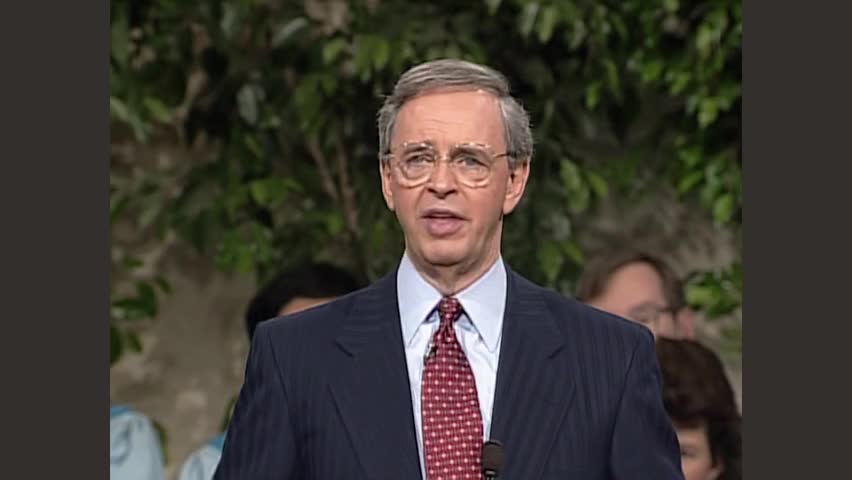
There is a game that is the oldest game in all humanity—the blame game. Dr. Stanley teaches the dangers of blaming others and that the best way to handle this game is to accept responsibility for our own actions. Learn how and why we should respond in a godly fashion when we feel hurt by others.
Dr. Charles Stanley: We are responsible, and the blame game is an attempt to eliminate, to escape our responsibility. If I'm going to play the blame game, what that will do is encourage me to sin. Because if I can sin and shift the responsibility to someone else, then I don't feel so bad. Likewise, we damage our fellowship with God. You cannot be in oneness with God holding somebody else, blaming someone else for something going on in your life. I am responsible for my responses. I am responsible for what I do. I can't blame someone else.
Guest (Male): It's easy to look at our circumstances and find someone else to blame for them. You know, he didn't do his share of the work, or she hurt my feelings, or they took advantage of me. Today's edition of In Touch, the teaching ministry of Dr. Charles Stanley, reminds us why it's never acceptable for Christians to play the blame game.
Dr. Charles Stanley: The title of this message is the title of the oldest game in all of humanity. It is a game all of us have played, probably many times in our life. It's not a game that creates the best atmosphere in the world, and it is a game that really isn't a whole lot of fun. It's a game that nobody ultimately wins. It was played by the very first family in the Bible, and the name of that game is the blame game. All of us have played this game. We played it when we were children. If you had brothers and sisters and your parent got after you, it was your sister's fault. Or to hear her tell the story, it was your fault. And so the blame game started as children. The problem is that many people never grow up when it comes to playing that game. You would think that we'd be smart enough after a while to realize that nobody wins that game. It didn't win then, it doesn't win now, and yet we still play it. The reason we play it is because somehow we think if we can play that game, we'll win and we'll be better off if we win. There is no way to win in the blame game. Now, there are times when people do hurt us. No question about it. They say things, they do things that really and truly deeply hurt us. The question is this: what is my response to be when I am genuinely, willfully wronged by someone else? I cannot hold someone else indebted to me for something they do wrong and walk in the spirit of God and be a godly man, and you can't be that and be a godly woman. We can't do it. It's not even a question of whether we've been hurt or not or whether we will be hurt or not. We all have been hurt, we all are going to be hurt. That's just part of living in a world where there is sin and disobedience and wickedness. We are going to get it. The issue is not whether we're going to be hurt or not or whether we have, but how do we respond? Godly men and women don't respond with blaming someone else. That is merely an escape mechanism to refuse to assume responsibility for the way they are reacting in that situation. People don't like to hear that because they say, "But if you just knew how I hurt." It doesn't make any difference. How did Jesus respond? Did He say to all of those who had wronged Him until He got to the cross, "I have forgiven all of you who have spoken badly against me, but this will not..." No. What did He say? He said, "Father, forgive them, for they know not what they do." He laid down the pattern for us. If anybody deserved being blamed, that bunch of Pharisees and Sadducees, they're the ones who deserve the full blame. They're the ones who got the people stirred up and lied about Jesus, got a whole crowd of people at the trial to lie about Him. Were they guilty? Absolutely, they were guilty. Unquestionably guilty. The fact they were so evil, they said, "Let his blood be upon our children and our children's children and grandchildren for centuries to come." He is so vile and wicked, "We hate this man, we despise this man." What did Jesus say? He said, "Father, forgive them. They don't understand what they're doing." You and I cannot justify a wrong response to those who have wronged us no matter what they do to us. Now, think about this for a moment. God did not say to Adam and Eve, "You poor things." He didn't say that. He said, "Adam, by the sweat of your brow, you're going to have to live from this point on. Eve, you're going to have pain in childbearing. And Satan, you're going to crawl on your belly." Isn't it interesting that God heard their excuses? And you know what? He ignored their blame. The Bible says God doesn't change. He's going to ignore my blaming someone else today just like He ignored their blaming someone else in those days. Think about this for a moment. He said, "Adam, you're responsible for your sin. Eve, you're responsible for your sin. And Satan, you're responsible for your sin." What does that say? You and I cannot blame someone else. We can't do it, even though they've hurt us. The only godly response is to be forgiving. I know that that is extremely difficult sometimes when you hurt so bad and you've got five hundred reasons that somebody has wronged you, or you find yourself in a situation where you think, "Well, Lord, if I hadn't grown up this way, and if I hadn't had this, and if my parents hadn't..." All of those things may be true. You may have been abused as a child. You may have been mistreated and you may have grown up in a bad situation. But you and I are free moral agents, and we have the Spirit of God on the inside of us who will enable us. The Bible says the fruit of the Spirit is vengeance, hostility, anger, bitterness? It doesn't say anything of the sort. The Bible says the fruit of the Spirit, that is the Holy Spirit who lives within us, the fruit of the Spirit is love and joy and peace and goodness and self-control. These are the fruits of the Spirit. It doesn't say the fruit of the Spirit is love, joy, peace, gentleness, self-control, and patience unless, except, if, and but. It doesn't say any of that. It just says the fruit of the Spirit. Does that mean that I can love people only when I'm loved? I can have peace only when the situation is created? For example, God says, "My peace I give unto you, not as the world gives, give I unto you. Let not your heart be troubled" unless, except, if, and but. No, because if someone else could control my life, you know what that means? They could control whether I have peace or not. No one else can control my thinking, your thinking. I can have peace if everybody around me hates me. I can have joy in my heart no matter what anybody thinks. I can have a sense of the love of God in my heart no matter how people treat me. Why? Because they can't make you feel anything but what you consent to feel. We are free moral agents. We decide how we're going to respond to people who hurt us. We decide whether we're going to be obedient or disobedient. And we are responsible, and the blame game is an attempt to eliminate, to escape our responsibility. The blame game has some very serious consequences, and I want us to think about two sections of these consequences. One of them is personal consequences that come our way, and secondly, national consequences that happen to a whole nation. What is the first one? Naturally the first one is this: if I'm going to play the blame game, what that will do is encourage me to sin. Because if I can sin and shift the responsibility to someone else, then I don't feel so bad. So it will encourage sin. That's certainly one simple thing. Secondly, it is certainly going to stunt my spiritual growth because I am only going to grow as far as I am where I start blaming someone else and still hold that against them. That's as far as I'm going. What happens is we get stuck. Likewise, we damage our fellowship with God. You cannot be in oneness with God holding somebody else, blaming someone else for something going on in your life. I am responsible for my responses, I am responsible for what I do. I can't blame someone else. Another part of it is this: when we think about the consequences of blaming someone else, it promotes terrible disharmony. For example, let's say someone has wronged you and you call one of your dear friends who happens to like this other person. And you say, "Let me tell you what she did to me." And so you tell them what she did. So this person says, "I can't believe they'd do such a thing as that." So what does that person do? They call their friend and say, "Did you know what so-and-so did to so-and-so?" Now remember this, that the second person isn't going to tell it like you told it. You mark that one down. They're not going to tell it like you told it. There's no way it doesn't happen. Blaming other people creates great disharmony. It creates disharmony in businesses, it creates disharmony in the home, it creates disharmony in the church, it creates disharmony among friends. Because you see, it's not God's way. God's way is forgiveness. God's way is laying it down, not blaming someone else even though they did it. What's my response? I am responsible for my response, and my response is forgiveness. Think about holding something against someone. They don't even know it. Who suffers in the blame game? The blamer. He or she is the sufferer. And so it doesn't fit who we are. In fact, when you think about the consequences, we're the ones who suffer. So it promotes disharmony, it promotes bitterness. Because the longer you hold on to blame, here's what they did, here's what happened to me because he did this, because she did that, and this is the reason I'm the way I am is because of them. You know what happens? Bitterness, hostility, anger, all the junky stuff that we don't want in our lives, that's what happens. Not only that, it hurts the testimony of the person who's blaming, and not only that, it oftentimes discredits the person whom you're blaming, especially it may be something that they did and they didn't even realize that it wasn't even something they intended to do. Even if they did, listen, even if somebody wrongs you and me, we do not have the right before God to discredit, in any way to hurt that person's image before others, or in any way to cause their personality and their reputation to be marred in some fashion. We don't have a right. You are not going to ever find Jesus doing it, and you're not going to ever find Him approving anybody who did. I am responsible for my responses no matter what. The blame game does not fit a child of God, and the consequences are devastating to it. Now, personally. What about nationally? Do you remember a few years ago there was a comedian, and every time he got caught or he did something wrong, you know what he said? What did he say? "The devil made me do it." Say it again. "The devil made me do it." Isn't it amazing that you all remember that? Isn't it amazing that you remember the devil made me do it? Who does that sound like in the Bible? Eve. Things haven't changed, have they? And so people still say, "Oh, well, the devil made me do it." My friend, that's not a joke. In other words, we can't get by with simply saying the devil made me do it. What has happened is this: we have developed in this nation of ours an idea that is like victimization. That is, we are now victims of all of these things that have happened to us. And this is why you and I watch the television, read the newspaper, and we're absolutely aghast at this. Somebody can walk into a store or their business and just shoot down five or six people, or they can just destroy a whole family, or do the most vicious, cruel things that I won't even mention here. They commit all kinds of crimes and they say, "Well, but their parents." And so here people can go in and absolutely destroy their parents and murder them in the most bloodthirsty way. And they put them on a trial and put them on a stand. And they finally conclude, "Well, they were abused by their parents." Do you think God said, "Well, you were abused by your parents; therefore, you are not guilty for murdering your parents"? Absolutely not. What we do, we undermine our whole judicial system by saying we excuse you because your circumstances were not good. Well, I'm here to tell you, you know, I would have been in prison just like a lot of you other folks would have been if we'd have gone on circumstance. But by the grace of God, God is willing to step in anybody's life who's willing to receive Him. A lot of those folks have rejected God. Some of the worst criminals went to Sunday school and went to church and heard the gospel, but they made a choice not to receive God. Whatever happened to these two words: sin and disobedience? Whatever happened to sin? What we're doing, the whole world, the whole nation has bought, they have bought out this victimization idea. Poor little old you, poor suffering you. Because you're sinning against God, and we're going to shift that responsibility to somebody back there in your family so you won't feel so bad. Now you will feel better. Do you know what's happening? They're not feeling better, they're feeling guilty. Secondly, they don't know why they're still feeling bad and still feeling guilty for the simple reason the only way to deal with sin is repentance. The only way to deal with things in my life that are not right is face up to them, assume responsibility for my actions. You let your children get away with that kind of stuff, and what happens? Then because parents allow their children to get away with doing wrong, because they themselves don't want to be rejected by their parents because they were rejected by their parents who were rejected by their parents. You can blame, you can blame your great-great-great-great-grandfather back yonder who's already in heaven looking down and thinking, "What did I do?" I mean, after all. It is a blame game and the truth is it has absolutely no... it has no end. You can blame anybody for anything. And what has happened is we bought this in the nation. It's no longer sin, it's no longer disobedience, it's no longer obeying God. For example, I could blame God in this way. I'd say, "Lord, now wait a minute. This has really got You, Father. You gave us Ten Commandments, and the Apostle Paul, who was Your favorite apostle... I mean, he was number one. He said that I couldn't keep them anyway." Uh-oh. God, You blew it on that one. You gave me Ten Commandments to live by and You knew I couldn't live up to them. That's not fair. The reason I break the Ten Commandments, God, is because Your fault. You should have given me a little leeway somewhere. In other words, You should have said, "Well, you should not steal often. You should honor your father and mother when you can." In other words, ridiculous. He says, "Here are the commandments. Only by the grace of God, through the power of the Spirit of God, can you live them. Can't live them yourself." You see, the blame game never ends. And what's happening is it has eroded our whole nation and we're all suffering as a result of it. I'm going to close here with simply saying this: there's only one way to handle the blame game, just one way. To be man and woman enough, mature enough to assume responsibility for our actions. When we wrong someone else, we assume responsibility. We don't look back yonder to find somebody to blame on what emotionally caused us to act a certain way. We've all done that at times, I'm sure I have. But the blame game doesn't fit who we are. So I have to first of all assume responsibility that whatever I do in life, I'm responsible for. Secondly, I have to assume this responsibility: no matter who wrongs me and who hurts me, I do not have the right to blame them and to hold it against them. Which means I must be forgiving, which means I don't hold it against them anymore, which means, listen, their debt toward me is paid. It's paid. You say, "Well, how did it get paid if they wronged you? How did it get paid?" I made a choice to forgive them. And my choice to forgive them means the debt's paid. They don't owe me anything. They don't have to do anything to make me feel better. They don't have to come crawling and creeping and saying this, that, or the other. None of that. When Jesus went to the cross, what happened? All the sin of all the world was placed upon Him, and He died in your behalf and my behalf. What did He atone for? What did He pay for? The sin of the whole world. So all of my sins are forgiven. If I sin against God, my fellowship with Him is broken and I have to deal with that. But there is nothing that can cause me to be lost and separated from God eternally. Why? That sin debt was paid eternally by the Lord Jesus Christ. Now let me ask you a question: what right do you and I have to hold anything against anybody no matter what they do to us, when God doesn't hold it against us? I do not have that right. The blame game does not fit the child of God. Now, you may say, "Well, I'm not even a Christian. Wait a minute, hold on." Well, let me ask you a question: why have you never trusted Jesus as your savior? I know what some of you are saying because I've heard this a lot of times. You've said, "Well, I'll tell you why I'm not a Christian. The reason I'm not a Christian is I've seen so many people who profess to be Christians and they don't live any better than I do." "And they're just... you Christians call them backslidden, and I just haven't seen people in the church living like I think they ought to live and living like you folks say they'll live. So therefore, when they straighten up, I'll become a Christian." You know what's going to happen to you? God's going to say to you as a lost person, "You're not responsible for them. You were looking at them; you should have been looking to me." "I never told you to get saved by looking at other Christians. I said you're to look to my Son, Jesus." My friend, it won't work. You can't blame ungodly Christians the way they act for the reason you're lost. Nor can you say, "Well, I didn't grow up in a Christian home." Most people didn't. But you've heard the truth, and so you're responsible. You see, you and I could come up with a thousand excuses for you not being saved, but none of them are going to be acceptable in the eyes of God. So I want to encourage you to ask the Lord Jesus to forgive you of your sins and to tell Him you're accepting His death at Calvary as full payment for your sin. You want to be one of His children and you're trusting Him right now as your personal savior by faith. Just that fast. Your sins are forgiven, you become a child of God. You can't blame God on not being saved. If somebody says, "Well, if I go to hell, it will be God's fault." No, it won't. God is a just God. He's righteous and holy, can't make any mistakes. Never has, never does. I just want to say to you that if you are a believer today and you've got some hurts in your life, and I mean you've got hurts and you've got scars, deep emotional scars, you may have some physical scars for the way you've been treated. I want to encourage you, my friend, for your sake, lay it down. You say, "Well, now how do I do that?" Here's what you do. You say, "Father, I do acknowledge that I've been wronged and I've been holding blame on my father, my mother, my grandfather, those who abused me, those who hurt me in my job. But today, I know that You've forgiven me, so I lay all that down. I hold it against them no more. I forgive them." It is an act of your will. You choose to forgive that person or those persons, and you thank God for His forgiveness and you thank God that as you lay it down, you no longer carry that. And the next time you see them, now listen carefully, next time you see them, something may pop up. But you say, "Thank You, Father, that they're forgiven, so I don't hold that against them." And depending upon the nature of how they wronged you, it won't take very long. When you see them, you'll just think love and you'll think they didn't understand what they were doing. If they'd just seen the consequences, they would never have done this. And you know what you'll do? You'll begin to feel an awesome sense of love for that person. Don't spend your life carrying emotional baggage that will ultimately destroy you and cheat you out of life's best.
Guest (Male): Thanks for joining us today for In Touch, the teaching ministry of Dr. Charles Stanley. Regardless of what's been done to you, a Christian's responsibility is to always forgive. And when you do, it opens the way for healing and restoration. For more teaching on the subject of forgiveness, visit intouch.org or go back over what you just heard when you click on Today on Radio. And if you go to our bookstore page, you can order a copy of today's complete message, The Blame Game. Again, that's intouch.org. To call or text, it's 1-800-InTouch. You can write to us at In Touch, Post Office Box 7900, Atlanta, Georgia, 30357. God cares about the details of our life, but do we pay attention to what He's doing through them? Today's moment with Charles Stanley is coming up. In Touch Plus is streaming on Local Now featuring all the best of Dr. Charles Stanley. We want to have strong convictions based on the Word of God. He's working out things that you and I would never know about in our future. In Touch Plus, your streaming network for quality Christian programming 24/7. Now watch this. In Touch Plus, streaming free on Local Now. At times, life can be stormy, and each one of us will face many trials. Questions are asked and doubt may set in. The answers are found through faith in Jesus. He is within every believer, always ready to offer His comfort, hope, and peace in times of great trial. So you can trust Him with any circumstance. To order Dr. Stanley's book, "How to Let God Solve Your Problems," call 1-800-InTouch or go to intouch.org/store. You're listening to In Touch. Every day is meaningful for the believer who's building a friendship with God. Here's a moment with Charles Stanley. The truth is that all through life, day in and day out, those circumstances, for example, we think, "Well, what about this, what about this?" God has it all worked out. If we just recognize it and thank Him for it, then what we are doing is we're walking in the will of God according to His schedule, not ours. And His schedule is always right. People will say things like, "Well, God isn't interested in something like traffic." Well, if you were in an accident and died, you'd think, "Well, I hope He is." And so we overlook a lot of things in our life. People at work, in their jobs, in relationships, people just overlooking things, "Well, you know, that's just part of life." But there's no such thing as a part of life when the Holy Spirit is living inside of you and giving you guidance and direction for your life. That is life. And for all of us who are believers, God's in everything. Learn more about what it means to be a follower of Christ when you visit us at intouch.org. Did God speak to your heart through today's message? Tell us what you plan to do next. Ahead on In Touch, it can be hard to live a godly life when evil seems to be everywhere. Get some pointers for living clean in a dirty world when you join us again for In Touch, the teaching ministry of Dr. Charles Stanley. This program is a presentation of In Touch Ministries, Atlanta, Georgia, and remains on this station through the grace of God and your faithful prayers and gifts.
Related Episodes
Living Clean in a Dirty World - Part 1
Thursday, July 30
The Blame Game - Part 1
Tuesday, July 28
Confidence in the Midst of Distress
Monday, July 27
Related Videos

About In Touch Ministries
In Touch Ministries is the broadcast teaching ministry of Dr. Charles Stanley.
About Dr. Charles Stanley
Dr. Charles Stanley
September 25, 1932 – April 18, 2023
Dr. Charles F. Stanley was the senior pastor of First Baptist Church Atlanta for more than fifty years. He was also the founder of In Touch Ministries and a New York Times best-selling author, who wrote more than seventy books encouraging people to seek Jesus as their Savior and know Him as their wise and loving Lord.
Known to audiences around the world through his wide-reaching TV and radio broadcasts, Stanley modeled his 65 years of ministry after the apostle Paul’s message in Acts 20:24: “Life is worth nothing unless I use it for doing the work assigned me by the Lord Jesus—the work of telling others the Good News about God’s mighty kindness and love.”
Contact In Touch Ministries with Dr. Charles Stanley
Mailing Address
In Touch Ministries
PO Box 7900
Atlanta, GA 30357
Phone Number
1-800-468-6824


