The Blame Game - Part 1
Ministries > In Touch Ministries with Dr. Charles Stanley

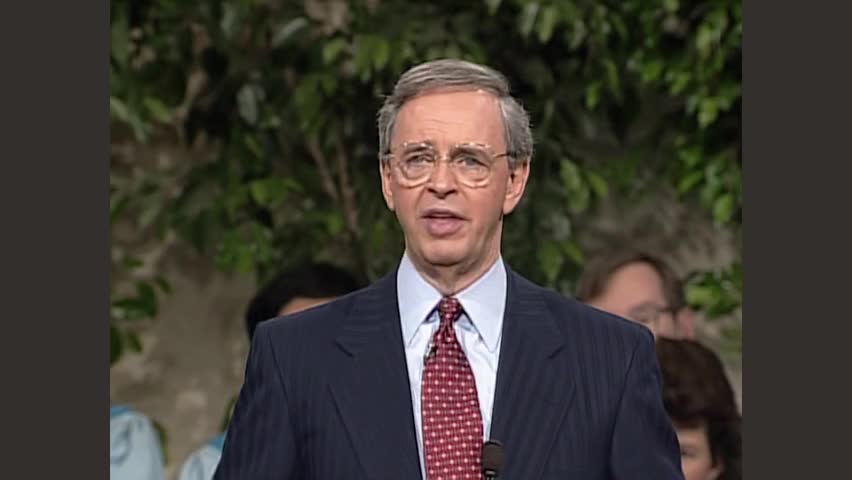
There is a game that is the oldest game in all humanity—the blame game. Dr. Stanley teaches the dangers of blaming others and that the best way to handle this game is to accept responsibility for our own actions. Learn how and why we should respond in a godly fashion when we feel hurt by others.
Dr. Charles Stanley: Do I have the right to blame you? Do I have the right to have ill will toward you, even when you have wronged me? According to the scripture, I don't believe you and I can play the blame game, frankly, and get by with it because what we are doing is we're doing this: We're assigning to someone else, we're saying it's your fault. Now what they did may be a willful act, a belligerence toward us, to hurt us in some fashion. How am I to respond? We have to ask, what is right?
Guest (Male): Kids will often place blame for their actions on anything but themselves. But children aren't the only ones who point fingers. Welcome to In Touch, the teaching ministry of Dr. Charles Stanley. Today's program encourages us to lay fault finding aside and instead look to Jesus for forgiveness, course correction, and healing. Here's part one of The Blame Game.
Dr. Charles Stanley: The title of this message is the title of the oldest game in all of humanity. It is a game all of us have played, probably many times in our life, and it's a game that nobody ultimately wins. And it's a game that was played by the very first family in the Bible, and that game, the name of that game, is the blame game. All of us at some time or the other have played that game, blaming someone else for our circumstances or for what they've done to us. And so I want you to read, if you will, in Genesis chapter three, in this very first book of the Bible, very first family. They played this game, and you'll recall, for example, in this third chapter, that Satan has tempted Eve, and she has partaken of the tree of good and evil which God forbid her to do and, of course, gave it to her husband. And so I want us to begin reading in this eighth verse. And the scripture says, and Adam and Eve now have sinned against God, and the Bible says, and they heard the sound of the Lord God walking in the garden in the cool of the day. And the man and his wife hid themselves from the presence of the Lord God among the trees of the garden. Then the Lord God called to the man and said to him, "Where are you?" And he said, "I heard the sound of thee in the garden, and I was afraid because I was naked, and so I hid myself." And He said, "Who told you that you were naked? Have you eaten from the tree of which I commanded you not to eat?" And the man said, "The woman whom thou gavest to be with me, she gave me from the tree, and I ate." And the Lord God said to the woman, "What is this you have done?" And the woman said, "The serpent deceived me, and I ate." And the Lord God said to the serpent, and He didn't say anything. You know why? Because there wasn't anything to say. He knew exactly where he was, and he knew exactly what was going on and what was happening, and so there wasn't any point in him making any excuse about what was going on. And so I want us to look at this passage and deal with something that all of us have to deal with because the truth is all of us at times are prone to blame someone else for our circumstances or blame someone else for something that they've said or something that they've done. And somehow we think it's going to make us feel better or look better. And what I want us to do is to look at this, and I want you to be honest as I've had to be in my own heart to ask myself the question: is there anybody I'm blaming for anything? Because when you and I open the word of God and look at reality, there are a lot of folks who have little subtle blames that they're using on people. They don't maybe say it, and then there are some people who have vehement blame. I mean, they're just absolutely bitterly blaming someone for something that has happened to them or the way they treated themselves. So let me say right up front. I'm not talking about being blamed for something you didn't do or necessarily or something you did. I'm simply saying that the blame game doesn't work. It doesn't work no matter whether you are guilty of what somebody has accused you of and you blame them or you have been blamed. It doesn't make any difference because the issue is: what is the right response when we sin against God, and what is the right response when we are accused of hurting someone when we did not or did not mean to? So when someone hurts us, what is our response? Do I have a right to blame and to lay blame and to claim blame and to lay the fault at someone else when they have wronged me? Well, whether it's in a church or whether it's in a school or whether it's in the government, and we certainly see that going on, or whether it's in your home or whether it's among your friends, the blame game according to the scripture just isn't God's way of doing things. Now, I want us to look at it for just a moment because what it is in essence is this: it is an attempt on our part to shift the responsibility for what's happening to someone else. For example, if I wrong someone and I don't want to assume responsibility, then I'm going to blame my circumstance or blame someone else for something that they said or something that they did. Or for example, let's say that I'm having some bad feeling about something, and so to get out of my depression, I'm just going to blame somebody else. I'm going to find, and you can always find, some reason to blame some circumstance or someone else for what you're feeling. Now, there are times when people do hurt us, no question about it. They say things, they do things that really and truly deeply hurt us. Now, the question is this: what is my response to be when I am genuinely and willfully wronged by someone else? Am I and do I have the right to say, "Well, here's what you did. What you did is that you did me wrong, and therefore because you wronged me, this is the way I feel. The way I feel is because you made me feel this way because I wouldn't feel this way if you hadn't made me feel that way." And so what I am doing is I am shifting, I am disowning what is rightfully mine. Let's say, for example, that you did wrong me. And so I say, "You are to blame, and therefore you need to pay." What am I doing? I am saying you're responsible and therefore you need to pay. But do I have the right to hold against you? Do I have the right to blame you? Do I have the right to have ill will toward you even when you have wronged me? According to the scripture, I don't believe you and I can play the blame game, frankly, and get by with it because what we are doing is we're assigning to someone else, we're saying it's your fault. Now, what they did may be a willful act, a belligerence toward us to hurt us in some fashion. How am I to respond, even though it's wrong? Well, no matter what they have done, we have to ask what is right, and according to the scripture, we have to ask this question: do I have the right to blame and to lay blame? Do I have the right to say to someone, do I have the right to express this, do I have a right to feel that, do I have a right to express that, do I have a right to harbor that in my life? Well, the truth is we don't because when you think about blame, it is shifting to them something that you and I may feel they certainly deserve. But as a believer, what is my response to be? You see, I am responsible for my responses to people who hurt me no matter what they do. I am still responsible to respond in a godly fashion. Just because someone hurts me does not mean that I have the right to hurt them back or to have ill will toward them or to defend myself in some fashion or to blame them. Now, what we have to ask is why do people play this game in the first place? Why do people get caught up in blaming others? Well, I think one of the primary reasons we play that game is because we don't want to feel exposed. That is, if we have some weakness or some frailty or let's say we've made a mistake or let's say, for example, we've sinned. The reason we play the blame game is we don't like to be exposed. We don't like for our weaknesses to show up. We don't like people to see how frail we really are. The truth is we all sin against God. The truth is we are all frail. The truth is we are all weak in areas of our life. But we don't like that, so we blame it on someone else. If you hadn't said that, I wouldn't have said this. If you hadn't done that, I wouldn't have done this. If you hadn't been there on time, I wouldn't have done so and so. And so we blame because what we want to do is we want to appear to be self-sufficient, adequate, and always there doing the right thing all the time when none of us do. And so to make ourselves feel better, we want to blame someone else. A second thing is this: we don't like the consequences. For example, if we have done wrong, we don't like the consequences, so the best thing we can do, the simplest thing is to blame somebody else. We don't like to face the change that is necessary. For example, if someone blames you for something and let's say that what they say is true. Well, for example, let's say that someone criticizes you and says, "Well, you know, you've got a real proud streak in you." Well, I can either accept that from God no matter who says it and deal with it, or I can say, "Well, who do you think you are? You're judging me." And then I can go ahead and I can switch that back on them and judge them for blaming me. Then what have I done? Well, I've sort of felt a little better now because what they've done is they have judged me, and for them to judge me would make them certainly more proud than I am. Next thing you know, I've got a real cycle going, and they're looking bad and I'm looking better all the time. The only problem is it is not God's way of responding to difficulties and hardships and blame and things that people want to put on us. And then, of course, we just don't like the idea of failing. So when you think about all the ways that people get into this blame game, what we have to ask is this: when it happens, who's responsible? Now, here's the bottom line. You and I are responsible when we make mistakes and when we do wrong. When we sin against God, we're responsible. It doesn't make any difference what it is; you and I can't blame someone else for what we do when it's wrong. Equally as important as this: neither can I justify my ill will toward someone else who has wronged me or is blaming me. I can't justify blaming someone. And so when you think about how we do react, we oftentimes quick to blame someone else. We are quick to retaliate. We're quick to let vengeance rise up on the inside of us. But blame says I lay this at their feet, I hold them responsible. What we have to ask is: whatever happened to forgiveness? Because it's real easy to blame and to hold someone responsible. And so when I look at Adam and Eve here, what happened here? The scripture says that when God spoke, that Adam said, "The woman whom You gave to me, she's the one. The woman whom You gave to me. It's because You gave me this woman, that's the reason I'm guilty." She said, "Well, the reason I did it is because Satan deceived me." Well, both of those things are true. The problem is that our sin is never justifiable; it doesn't make any difference what caused it. And so as long as I can shift the blame to someone else, then I refuse to assume personal responsibility for my actions. Now, when you and I refuse to assume personal responsibility for our actions, then what we are doing is we've got to blame something: circumstance, people, whatever it may be. In God's eyes, that is never acceptable. It wasn't acceptable with Adam and Eve. God didn't say, "Well, you poor things. You know what? That's true, and therefore I'm just going to let you get by with that." He didn't say that. He held them responsible for their responses. Sure, Satan said to Eve, he lied, he twisted the word of God. He said, "This will be good for your taste. It certainly will satisfy your desire for beauty and knowledge; you'll be like God." Now, the fact that she sinned against God, she was deceived, no doubt about it. But the fact that she did, she can't blame her action, and I'm going to show you why. She can't blame that on Satan. He can't blame that on his wife. We can't blame our disobedience on anybody. We have to assume personal responsibility. For example, all of us have a free will. Now, when I say a free will, I mean up to a certain limitation. God doesn't give absolute freedom to anybody or people could do things that God's not going to allow them to do. But for the most part, let's say we do have to a great degree a free will, which means that we have the right to choose. So that if I have the freedom to make choices, upon whom can I lay the blame for the choices I make? Nobody can make me make the choices I make in life. Now, if no one can make me make that choice, how in the world am I going to blame someone else? You say, "Well, let me tell you what someone did to me." So somebody gossips about you terribly or says something horrible about you, and I mean you are just having a terrible time with that. And so your response is you hold them responsible. And so you say, "Well, here's what they did," and so you blame them. And let's say that someone else listens to them and so they start feeling hard toward you, and so you blame them and you lay it at their feet. Now, it is not your fault for what they said. You couldn't help what someone else says about you or what someone else does to you. You and I are not responsible for what they do to us. We are responsible for how we respond to what they do to us. Listen, you and I are just as responsible for how we respond to wrongs done to us as they are for the wrongs that they did. And therefore, that eliminates me playing the blame game. I can't blame someone else. Now, they may have done it, they may have said it, and everything they said right here is true. And that is Adam said, "She gave it to me," she did. Eve said, "Satan tempted me and he deceived me," and he did. No question about it. But isn't it interesting that God says, "Well, let's see what's going on here." He didn't say anything. And if you'll notice what He did when He came to the latter part of this third chapter, He starts talking about what's going to happen to them as a result of their making choices which they knew were wrong. Now, so when we start talking about blame and blaming someone else for what they do, as a child of God in whom the Spirit of God is living, you and I have the power within us to forgive people no matter what they do to us. Now, if we didn't have that power within us, that's something else. But when you and I became a child of God, the Bible says we were born again. We have a new nature, a new spirit, a new heart, and a new life. There sometime we can act like the world, but we're still different; we're new. And therefore, we have the Holy Spirit living on the inside of us who will enable you and me to respond correctly in any and every situation. And the blame game does not fit a child of God of holding something against someone else. Maybe they did, maybe they did hurt you badly. No question about it. And so you say, "Well, because they did this, this is the way I feel." No, there's no place in scripture where you and I will find that we have the privilege of holding animosity toward someone else because of what they did to us. I don't have the right to play this game. I don't have the right to blame and to hold that blame toward someone else, to lay it at their feet and keep it there. Now, you say, "Well, what about this idea? Are you talking about controlling and the whole issue here of other people making us do things?" Haven't you heard people say, "You make me feel horrible"? No, they don't; you chose to. "You make me angry." Did you know that nobody can make you angry? Now, if somebody else could control your life, they can. But I want you to think about something for a moment. Where in the Bible do you ever find Jesus controlling anybody? He doesn't do it. If He were going to control someone, He'd have controlled Judas and Peter, for two, just two examples. He would have controlled many people. He would have controlled Pilate. He would have controlled the men who were going to nail Him to a tree. I mean, Jesus is nowhere in— He's not anywhere controlling people. You know what He would do? He would preach, and multitudes would come and listen to Him. Some of them would turn away. If He were going to control someone, He would have said, "All of you believe in Me as Savior and Lord and you are now saved." He would have controlled their salvation. If Jesus had controlled one person, why not control them all? You see, He didn't operate that way. They had a free will. Some of them listened to Him and said, "We don't believe this." In fact, on one occasion, so many people walking away, He said even to His disciples, He said, "Are you all leaving too?" There's not a single evidence in the Bible where God controls a person. He will put great pressure upon us. When God wants us to do something and we don't want to do it, He'll put intense pressure upon us. But the ultimate, final decision in our life is we choose how we're going to respond. Now, if you'll think about folks who do this, if you'll think about people that you're around who are always blaming someone else, what are they usually doing? Their conversation is other-oriented. In other words, it's how I feel, what he did, this is how they hurt me. And so if you think about it, you don't really want to be around somebody who's always blaming someone else. What they're doing is they refuse to assume responsibility for their actions if they have wronged someone else, or for their attitude even though someone else has wronged them. Now, we don't like that part. We think, "Well, I know, but you mean to tell me that if someone wrongs me, that I'm responsible for my response?" Absolutely we are. Why? Because they cannot control us. No one else can control your responses, and they're not really responsible for your responses. You say, "But you mean to tell me that if somebody hurts me deeply, that they're not responsible for the way I feel?" Because you and I choose the way we feel. Listen, all of us can come up with something that someone has done to us and hurt us deeply. You know what you'll find? You're going to find somebody else who's hurt more deeply than you've ever been hurt, who's been wronged in worse ways than you and I have been wronged. And you know what? They have this sweet, loving, godly spirit about them. Why? Because they chose not to respond in an ungodly fashion. And you see, if we have a free will, you and I choose how we're going to respond. Now, Adam could have said, "God, we are naked, we're hiding out, we sinned against You, we are ashamed, and we are so sorry. And how do You handle it when we do things like this?" No, he said, "The woman You gave me, she's the one who blew it. She gave it to me." God didn't accept their answers, and He doesn't accept ours. I cannot hold someone else indebted to me for something they do wrong and walk in the spirit of God and be a godly man, or you can't be that and be a godly woman. We can't do it. It's not even a question of whether we've been hurt or not or whether we will be hurt or not. We all, listen, we all have been hurt, we all are going to be hurt. That's just part of living in a world where there is sin and disobedience and wickedness and violence. We're going to get it. But the issue is this: not whether we're going to be hurt or not or whether we have, but how do we respond? You and I cannot justify a wrong response to those who have wronged us no matter what they do to us.
Guest (Male): Thanks for joining us on In Touch, the teaching ministry of Dr. Charles Stanley. In every hurtful situation, the Christian's response must be to let go and forgive. Give up your desire to blame the other person and enjoy the freedom that will come as the eventual result of genuine forgiveness. Learn more about forgiveness and restoration when you log on to intouch.org, and there's a link to the message again on our homepage. Look for today on radio. And that's where you can also order a copy of Dr. Stanley's complete message, The Blame Game. Again, log on to intouch.org. To call or text, the number is 1-800-IN-TOUCH. To write to us, address your letter to In Touch, Post Office Box 7900, Atlanta, Georgia, 30357. Are you wondering when the storm in your life will lift? Insight is just ahead in today's Moment with Charles Stanley.
Guest (Female): There is an inexplicable joy that comes from understanding scripture and learning how to apply it in our own life. The Charles F. Stanley Life Principles Bible includes 30 foundational truths that Dr. Stanley has learned from over 60 years of ministry. It's available in the New King James Version, New International Version, the King James Version, and New American Standard Bible version. To order, call 1-800-IN-TOUCH or go to intouch.org/store.
Guest (Male): With the 30 Life Principles Bible Study, you'll enjoy a rich exploration of God's word. Designed as a 90-day learning experience for individual use or in a group setting, you'll explore Dr. Stanley's 30 life principles and learn how to make the Bible a part of your everyday life because we can all benefit from a closer look. To order the 30 Life Principles Bible Study, call 1-800-IN-TOUCH or visit intouch.org/store.
Guest (Female): From the Pastor's Heart is an in-depth teaching letter inspired by the teachings of Dr. Charles Stanley. To receive In Touch's From the Pastor's Heart letter, call 1-800-IN-TOUCH or visit intouch.org/pastorsheart.
Guest (Male): You're listening to In Touch. God can strengthen us through difficulty. With a perspective for believers, here's a moment with Charles Stanley.
Dr. Charles Stanley: Well, I think a lot of us have been to that place probably at some point where we thought, "Lord, how much more can I handle? And Lord, why are You letting this happen?" And sometimes we know why it's happening. We look at our lives and we realize that God's up to something good. And because it's painful, we don't think it's good. But remember what He said. He said He causes all things to work together for good to those who love Him, to those who are called according to His purpose. And so even though it's painful, it can be good. Now, what we have to remember is this: the sooner you and I relax and say, "Okay, God, whatever You want is what I want," all of a sudden it's amazing our attitude changes right in the middle of that storm. Someone says, "Well, how can I do that?" You have to get your focus on God. Help me to understand why I'm going through this. And it's amazing that once you understand why God is allowing something like that, you just have this awesome sense of peace that covers you even though the pain is still there; there's a peace that prevails above all of that. And so I just want to have a word of prayer for some of you who may be going through a storm right now, and you've been in it a long time and you're about to give up and quit. Don't give up. God hasn't given up on you; you don't have to give up on Him. Let's pray. Father, how grateful we are that You've said, "I will never leave you nor forsake you." We accept that as true, and I trust that somebody who is hurting very painfully right now would recognize that sometimes that's just an act of love on Your part. You're up to something very good in their life. Give them the courage to hold on and the faith to trust You that You're a good God, full of goodness, love, and mercy, and that You will see them through this and You will accomplish Your purpose for them, in Jesus' name. Amen.
Guest (Male): God's peace can belong to anyone who trusts in Jesus Christ for the forgiveness of their sin. Learn more at intouch.org. And if you have a story about what you've learned through this program, please share it with us. When In Touch continues next time, you'll hear the conclusion to this message that exposes the self-destructive nature of the blame game. Join us again for In Touch, the teaching ministry of Dr. Charles Stanley. This program is a presentation of In Touch Ministries, Atlanta, Georgia, and remains on this station through the grace of God and your faithful prayers and gifts.
Related Episodes
Living Clean in a Dirty World - Part 1
Thursday, July 30
The Blame Game - Part 2
Wednesday, July 29
Confidence in the Midst of Distress
Monday, July 27
Related Videos

About In Touch Ministries
In Touch Ministries is the broadcast teaching ministry of Dr. Charles Stanley.
About Dr. Charles Stanley
Dr. Charles Stanley
September 25, 1932 – April 18, 2023
Dr. Charles F. Stanley was the senior pastor of First Baptist Church Atlanta for more than fifty years. He was also the founder of In Touch Ministries and a New York Times best-selling author, who wrote more than seventy books encouraging people to seek Jesus as their Savior and know Him as their wise and loving Lord.
Known to audiences around the world through his wide-reaching TV and radio broadcasts, Stanley modeled his 65 years of ministry after the apostle Paul’s message in Acts 20:24: “Life is worth nothing unless I use it for doing the work assigned me by the Lord Jesus—the work of telling others the Good News about God’s mighty kindness and love.”
Contact In Touch Ministries with Dr. Charles Stanley
Mailing Address
In Touch Ministries
PO Box 7900
Atlanta, GA 30357
Phone Number
1-800-468-6824


