Where We Are in the Stream of Time pt. 1
Ministries > HopeLives365 with Mark Finley
SUBSCRIBE:
Apple Podcasts
The world does not know that they are in store for an overwhelming surprise. And God has so meticulously laid out the stream of events that will take place that no one can deny it. Yet, still, many in the world will not heed it. But one thing is certain for all – life is short, death is certain, eternity is forever.
Mark Finley: In the blazing light of eternity, with the signs of the times running out, in the recognition of the brevity of life, is it your desire today to let the beauty of the Lord shine upon you?
Guest (Male): This is Hope Lives 365 with Pastor Mark Finley. Today's message: "Where Are We in the Stream of Time? Part 1." Enjoy and remember you can always catch up with past messages and stay up-to-date with Hope Lives 365 and Pastor Mark by going to hopelives365.com. And now, Pastor Mark Finley.
Mark Finley: Now we should not be surprised as Bible students at the increasing number of natural disasters today. You'll recall that Jesus predicted in Luke chapter 21 that there would be a rise of natural disasters before his return. Luke 21:11: "And great earthquakes shall be in divers places, and famines, and pestilences." And notice this phrase: "And fearful sights and great signs shall there be from heaven." If ever there was a fearful sight from heaven, it was the approach of Hurricane Ian coming rapidly into places like Sarasota, Florida, and the Florida coast. That certainly was a fearful sign in heaven. But then if you look further down in that chapter, Luke 21 at verse 25, there will be signs in the sun, and in the moon, and in the stars; and upon the earth distress of nations. I was interested in this last phrase: "with perplexity; the sea and the waves roaring." Did we experience a disaster in Florida that was very unlike many other disasters ever to hit the coast of America? But do you know Hurricane Ian was not the most devastating storm that ever hit the American coast? In 1938, September 21, the New England Hurricane was one of the most deadly and most destructive tropical storms that ever hit America. It made landfall in Long Island, New York, and proceeded to devastate New England. The storm formed off the coast of Africa on September 9. But on September 21, it approached the American coast. Now, it's estimated—get this—it's estimated that that one hurricane in 1938 killed more than 700 people. Some 57,000 homes were destroyed and it did over $5 billion worth of damage if you estimate that in American currency. Now, in September of 1938, there was a man that lived on Long Island. You have to understand that in those days we did not have the weather forecasting ability that we do today. We can pretty well know when a hurricane is coming today. But in those days, people depended on what was known as barometers. Some of you are old enough to remember that. And this man had ordered a very expensive barometer, a very fine barometer. And it came to his home on September 21, 1938, before the hurricane hit. And he saw it, and the needle was on hurricane. He looked at that barometer and he shook it. He shook it again. He shook it again, and he said, "I paid so much money for this barometer and it's faulty. There is no hurricane coming." He packaged it up and wrote a scathing letter to the company that sold him the barometer. He said, "I paid all that money and you sold me this cheap piece of junk. You need to return my money." He drove to work. The clouds darkened. The wind began to blow. The rain began to pound down. By the time he could make his way back to his house after the storm, it was gone and his precious barometer was no longer there. What was this man's problem? The man's problem was very simple: he refused to accept the readings on the barometer. He trusted his own judgment. He didn't recognize that there were storm clouds on the horizon. Back there in 1938, they didn't have those sophisticated methods of tracking hurricanes. The only thing this man had was the barometer, and he refused to accept its leading, its guidance, and its readings. The needle on the barometer of time is pointing to hurricane warnings on the horizons of this world. We are told through divine inspiration that a storm is coming, relentless in its fury. And again, the question is raised: are we prepared to meet it? There's a fascinating statement in a book called *Child Guidance* on page 555, and it says a storm is coming, relentless in its fury, and we are to prepare to meet it. Then this last couple of sentences: "We who know the truth should be preparing for what is to come upon the world as an overwhelming surprise." Is most of the world aware of what's soon to happen? Not at all. This week, I spent time looking through scripture on statements on time. There's one thing that nobody has any more than you do today, and that's time. However wealthy an individual is, they may have more money than you do, they may have more homes than you do, they may have more clothes in their closet than you do, but they have no more time than we have. Looking at the coming of Jesus and going through scripture and looking at the concept of time in scripture, what instruction does the Bible give us? We begin in Romans the 13th chapter. There are four passages we're going to study about time. We are beginning there with verse 11. The first principle is this: understanding where we are in the stream of time is vital. Understanding where we are in the stream of time is of paramount importance. Understanding where we are in the stream of time is a priority. Romans the 13th chapter, verse 11: "And that, knowing the time." Now notice what scripture does not say; it does not say guessing about the time. It's no maybe, perhaps, or "I think so." Knowing the time. "Now it is high time to awake out of sleep: for now is our salvation nearer than when we believed." Understanding this matter of time and where we are in the stream of time is essential for the preparation for the coming of Jesus. There are three main chapters in the New Testament that have to do with the signs of the times: Matthew 24, Luke 21, and Mark 13. Now, that should prompt us and get our attention immediately. Why? Because if the New Testament writers, Matthew, Mark, and Luke, in those gospels, if they each one devote an entire chapter to the signs of the times, it must be important that we understand them. Many of us are familiar with those signs of the end. The Bible talks about false Christs and false prophets. It talks about wars and rumors of wars. It talks about conflict among the nations, famine, pestilence, earthquakes, natural disasters, rising crime and violence, lawlessness, and the deterioration of the family unit. Now, here's the question, though: haven't these things been present for 2,000 years? Haven't we had famines for 2,000 years since the time that these signs were given? Haven't there been wars for 2,000 years? Hasn't there been crime in the streets? Why is it that this generation could be unique if those signs existed down through the centuries? What is different about this generation? There is an aspect that distinguishes this generation from any other, and here is what it is. Before the last century, before the 20th century, the wars, famines, pestilences, natural disasters, and economic woes were largely events isolated to different parts of the world. They were largely local events. You might have a famine in a country in Africa. You might have a war in a country in Europe. But these were very isolated events. They were largely local, involving a country, a community, or a group of countries. But today they are global. Let me give you a few examples. Take the COVID pandemic that we've just gone through. Was that isolated to one country? Not at all. It was a global pandemic. It impacted our entire planet. Consider the threat of nuclear war. Vladimir Putin is rattling the saber of nuclear attack. Nuclear war would infect the entire planet. If you look back 100 years ago, that never could have happened. Think about the oil crisis and rising gas prices. A country that most of us have never visited—and I would say many of us couldn't even put our finger on it on the map—Saudi Arabia produces oil. That country, when they raise oil prices, it impacts you here in Haymarket in your gas prices and it impacts food prices. So today we're living in a global community. Think about, for example, fluctuating exchange rates in the currencies and how they impact the world. Think about it this way: China is 7,000 miles from the California coast, and about 10,000 miles from us. But the Chinese government makes a decision on the price of clothes. We import them. They make a decision on the price of electronic goods. We import them. A decision made in a small room in China impacts you as you go to the store to buy that TV or that stereo.
Guest (Male): You're listening to Hope Lives 365. We'll be right back. And if you like what you're hearing, we invite you to check out our website, hopelives365.com. There you can find many ministry resources, encouraging messages, and even a link to our Hope Lives 365 YouTube ministry. And of course, an opportunity to sow into this valuable ministry. Find out more by going to hopelives365.com. That's hopelives365.com. And now back to Pastor Mark Finley.
Mark Finley: Think about fluctuating exchange rates in the currencies and how they impact the world. Think about it this way: China is 7,000 miles from the California coast and about 10,000 miles from us. But the Chinese government makes a decision on the price of clothes. We import them. They make a decision on the price of electronic goods. We import them. A decision made in a small room in China impacts you as you go to the store to buy that TV or that stereo. Here's the point: we are living at a time of a global community unprecedented in history where the signs of the times are no longer isolated. They are universal signs that are impacting all humanity. And what does Paul say? "Knowing the time." Your salvation is far nearer than you ever believed. We also look at the prophecies of Daniel and Revelation. Where are we in the stream of time in those prophecies? You look at the great prophecy of Daniel 2 with the head of gold, the breast and arms of silver, the thighs of brass, the legs of iron, and the feet of iron and clay. Are we in the head of gold, Babylon? Are we in the breast and arms of silver, Medo-Persia? Are we in the brass of Greece? We're down there, as somebody says, in the toenails of the image, right before that rock crushes the image. Where are we if you look at every prophecy? Look at Daniel 7: lion, bear, leopard, dragon-like beast, little horn power, judgment. We're not back there in the days of the lion, the bear, the leopard, and the dragon, are we? If you look at prophecy down the stream of time, you say to yourself, "We must be living toward the end of human history." Or you look, for example, at a passage in Revelation like Revelation 11, which to me is an incredibly powerful passage. This passage could not have been fulfilled 100 years ago. But when we think of the threat of nuclear war, when we think of the possibility of climate change and the deterioration of our planet through industrial pollution, you look at Revelation 11 verse 18: "And the nations were angry, and thy wrath is come, and the time of the dead, that they should be judged." When's that? "And that thou shouldest give reward unto thy servants the prophets." When's that? When Christ comes. "And to the saints, and them that fear thy name, small and great." Now notice the last phrase: "and shouldest destroy them which destroy the earth." Here's the question: did the human race have the capacity to destroy itself 100 years ago? So this passage tells us from the prophetic word that Jesus will come at a time that is unique in history where the human race is bonded together in an intercontinental confederacy and the human race has the capacity or the ability to destroy itself. Paul's urgent appeal is to know the time. Don't fall asleep on the knife-edge of eternity. Paul is appealing to one of the strongest Christian motives, and that is to allow the love of God to transform your life so that living on the knife-edge of eternity, you can be prepared for the coming of Jesus. Paul is saying to the Christians at Rome and to you and me—the Christians at Rome were living in a godless pagan culture. He was saying to them to awake from indolence, put off lukewarmness, abstain from self-indulgence, and be alert to heaven's signals. Most of you have a cellphone, right? Don't take it out now. Have you ever had your cellphone and you're trying to call somebody, and you look at the bars on your cellphone, and there's no bars there? Then finally there's that one little bar that's flickering. You say, "I've got to make this important phone call." Maybe you're traveling, you're the husband, you're going to be home late, and you want to call your wife. You dial the number—you put it in the speed dial because you have your wife's number there—and you call. "Hello, honey? I can't hear you! Hello? I can't hear you! Hello? You don't have a good connection!" How many of you ever had that happen to you? Most of us did, didn't we? We don't have a good connection. Why? We wandered out of the zone that enables us to be connected to the satellite above. Have you wandered out of the zone so that the voice of God to your heart is fuzzy? Is the connection between you and God like a fuzzy signal on a cellphone? Have you ever been in a place where your coverage is spotty? It is difficult to hear the other person on the other end of the transmission. There are times we wander out of the coverage zone. Sometimes we have no bars on the spiritual phone and we lost the signal. Here's what Paul says: Paul says to be sure to stay alert. Don't get out of the coverage zone. Be sure to listen to the messages that God is sending you every day. The fact that time has gone on a little longer than we expected means for us that we have the danger of what I call advent fatigue. Some of you have heard the preaching of the coming of Christ from the time you were children. The longer the delay is, the more the possibility is that we develop advent fatigue, that we no longer live with the expectation, the excitement, or the enthusiasm that Christ is coming soon. Но the fact that Jesus has not yet come doesn't mean his coming is further away; it means his coming is closer. The fact that he hasn't come doesn't mean the Bible has failed in any way at all. It means that now is the time to prepare our hearts. Paul speaks to us today here in this time, in this place. He says to each one of us to know the time. It's high time to awake out of sleep. The first aspect of time that we study is knowing the time: staying alert and not allowing the culture around us to squeeze us into its mold. The second aspect of time in the New Testament is to cherish the time. The first is to know the time. The second is to cherish the time. James chapter 4, verses 13 to 17. Paul says to know the time. James says to cherish the time. We begin with verse 13, a powerful Bible passage on time. It's talking about the brevity of life. James chapter 4, verse 13: "Go to now, ye that say, To day or to morrow we will go into such a city, and continue there a year, and buy and sell, and get gain: Whereas ye know not what shall be on the morrow. For what is your life? It is even a vapour, that appeareth for a little time, and then vanisheth away. For that ye ought to say, If the Lord will, we shall live, and do this, or that. But now ye rejoice in your boastings: all such rejoicing is evil." What is James saying? When you look at verse 14, you have the heart of what he's saying. He's saying, "What is your life?" It's like a vapor. Understanding the brevity of life causes us to cherish each moment. It motivates us to refocus our energies. It prompts us to reevaluate our priorities. James is pointing out—Jesus through James and the Holy Spirit is pointing out—that we have no guarantee for tomorrow. He's underlining with two punctuation points that we don't have time to lose and that every moment is important. I love the words of the poet Charles Studd who says, "Only one life, 'twill soon be past. Only what's done for Christ will last." Here's an eternal principle: life is short, death is certain, and eternity is forever. Can you say that with me? Life is short. Death is certain. Eternity is forever. Death is certain unless Jesus comes. There are only two ways out of this world. One is you die in Christ and you're resurrected, or Jesus comes and you're translated. Но if Jesus doesn't come, three things: life is short, death is certain, and eternity is forever. Cherish each moment. Don't do anything in your life that you're going to regret later on. Develop positive relationships with the people around you. Arise each morning with the joyful anticipation that this is a new day in Christ. It's a new day to experience the closeness of his presence, a new day to experience the warmth of his love, and a new day to experience the touch of his healing grace. Life is too short to hold grudges, nurture hurt feelings, or dwell on the pain that others have caused us. Life is too short to spend it on the trivial, unimportant things of life. Life is too short to be shaped by the culture, the values, and the attitudes of this world. Life is too short to miss out on eternity, for eternity is forever. And forever is a long time.
Guest (Male): You've been listening to Hope Lives 365 with Pastor Mark Finley. We hope you've enjoyed today's message and remind you that you can find more in our many ministry resources at hopelives365.com. And you can support this ministry by going to hopelives365.com/donate. And now a final thought from Pastor Mark.
Mark Finley: You and I are composing a character for the Kingdom of Heaven. The character reveals the sweetness of Jesus' love. We're developing characters that stand the test of time, that will go through the crisis that's coming. In a world of darkness, we'll reflect God's love and his grace and his goodness. So the Apostle Paul says to redeem your time. Spend your time on things that really count. Guard your moments carefully. Here are four questions to ask yourself at the end of the day. Number one: did I spend my time profitably today, or did I trifle it away? Number two: did I use my time in productive ways? Number three: were my actions pleasing to God today? And this really leads us to our fourth and final principle: know the time. Cherish each moment. Where you've made mistakes in the past, redeem the time. It is never too late to begin making good decisions. And the sooner you begin making good decisions, the sooner good things are going to happen.
Related Episodes
Where We Are in the Stream of Time pt. 2
Thursday, July 30
How Will God Solve the Greatest Problem in the Universe pt. 2
Tuesday, July 28
How Will God Solve the Greatest Problem in the Universe pt. 1
Monday, July 27
Related Videos
About HopeLives365
HopeLives365 exists as an international Bible based Christ-centered ministry to give people hope for today, tomorrow and forever. We believe that discovering God’s ultimate plan for our lives brings life’s greatest joy. In a world of uncertainty, God’s Word, rightly understood, brings certainty and assurance. Our ministry will provide you with the resources to live a life of total health-physically, mentally, emotionally and spiritually. If you are interested in improving your physical, mental, emotional and spiritual health there are resources on our HopeLives365 site that will make a positive difference in your life. If you have questions about faith check out our short video clips titled “Truth Still Lives.” If you would like to listen to powerful Biblical Sermons, Pastor Finley’s messages will touch your heart and change your life. If you want material on healthful living, Ernestine Finley’s Natural Lifestyle Cookbook and health related materials will get you on your way to a longer, happier and more fulfilled life. If you have concerns about the future and would like to face tomorrow with greater confidence our presentations on Bible prophecy or one of our Bible Courses are just what you need. The resources on this site are designed with you in mind to enrich your life. It is our desire that they make a powerful difference for you and your family.About Mark Finley
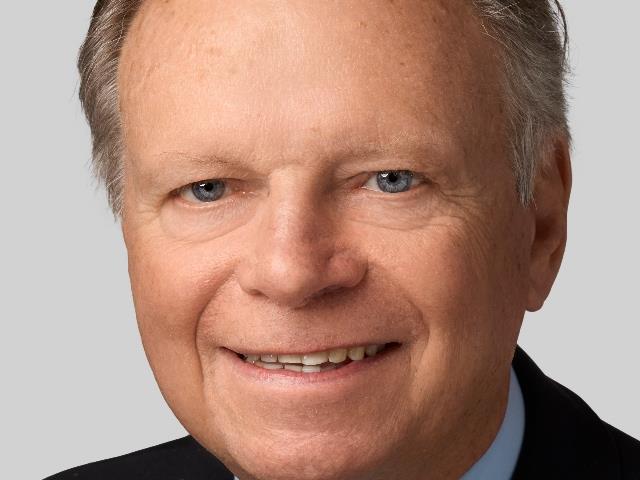
Mark Finley is an international evangelist, television and radio personality, author, teacher, and speaker for the Hope Lives 365 broadcast. He regularly conducts international satellite evangelistic campaigns with tens of thousands in attendance and has spoken in nearly 100 countries. His sermons have been translated into over 50 languages. He has written more than 70 books on Christian living, Bible doctrines, and the prophecies of Daniel and Revelation.Pastor Finley is a faithful student of scripture and proclaimer of Bible truth. He profoundly believes that the Bible is the inspired word of God and provides answers for the deepest questions of life today. His sincerity and love for people shine through each presentation. He and his wife Ernestine have teamed up in Christian ministry for over fifty years. She is known worldwide for teaching Natural Lifestyle Cooking. Continue their Today the Finley’s continue their worldwide ministry at the Living Hope School of Evangelism in Haymarket, Va. and also conduct a Retreat Center for pastors from throughout North America.
Contact HopeLives365 with Mark Finley
Phone:
1-855-888-4673


