Are You Ready for God's Final Judgement pt. 1
Ministries > HopeLives365 with Mark Finley
SUBSCRIBE:
Apple Podcasts
In the book of Ecclesiastes it says, God has placed eternity in our hearts. From the time you were born, the Holy Spirit has been working to draw you out to the things of eternity. He arranges circumstances in our lives to reveal Himself to you.
Mark Finley: He has come to put away sin, not simply to pardon our sin, but to deliver us from the grip of sin.
Guest (Male): This is Hope Lives 365 with Pastor Mark Finley. Today's message: Ancient Sanctuary, Are You Ready for God's Final Judgment? Part one. Enjoy and remember you can always catch up with past messages and stay up to date with Hope Lives 365 and Pastor Mark by going to hopelives365.com. And now, Pastor Mark Finley.
Mark Finley: Many years ago, Daniel Webster was one of America's best-known statesmen and orators. When Daniel Webster spoke, the crowds sat in rapt attention. He was a political genius, understood politics, but he understood law and he understood statesmanship. One day after a state banquet, Daniel Webster was asked this question: "What is the most serious thought that has ever passed across your mind?" Daniel Webster said this: "The sense of my individual responsibility to God." He said the most serious thing I've ever thought of in my life, the most significant thought that has ever passed through my mind, was the sense of my responsibility to God. Then he went on to explain himself. He said this thought is not pleasant to those who are living in their sins and out of relationship to him, and consequently are not prepared to face the tremendous issues involved. But whether the issues are faced or not, the fact remains. He continues, "So then every one of us shall give account of himself to God. We are all responsible to God, as the word of God declares, and cannot escape our responsibility." Daniel Webster was right. Every single one of us one day will give account of himself to God. Whether we believe it or not, whether we understand it or not, makes little difference. God created us as free moral agents. He's given every one of us the power of choice, and ultimately we'll be responsible for the choices that we make. Someone said choices are the stuff that life is made of, and our choices will determine our eternal destiny. From the time you were born, the Holy Spirit began working in your life to draw you out to the things of eternity. In Ecclesiastes 3:11, the Bible says that God has placed eternity in their hearts. In John chapter one, the Bible says that Christ is the light that lights every man and woman that has ever come into the world. So from the time you were born, those tinges that you have in your heart, those inclinations that you have in your heart to do right, were placed there by God. Every right impulse is placed in our hearts by God. Every right desire is placed in our heart by God. God then not only places those desires in our heart, but God arranges circumstances in our lives to draw us to Him. God reveals Himself to us in a variety of ways. He reveals His majesty in nature. He reveals His beauty in the sunrise, in a beautiful flower bed. God reveals Himself to us constantly, and His attempt is to draw us to Him. He reveals Himself most fully in the word of God. It's there we learn of His grace, there we learn of His mercy, there we learn of His love, there we learn of His compassion, there we learn of His goodness, there we learn of His mighty power, but His goal is to draw us to Himself. But God will never make the choice for us. Choices are the stuff that indeed life is made of. God has created us with free will, and we're responsible for the choices we make. A friend of mine tells this story: His father had just become a Christian, and his father had this terrible habit of chewing snuff. His dad would get up in the morning and say, "God, I'm giving up my snuff," and he'd spit this big chew of tobacco in his hand. They lived out on the farm and his father would walk out on the porch and he'd take this big chew of snuff and he'd throw it as far as he could among the cornstalks. Then my friend said about noontime he saw his dad walking up and down those cornstalks. What do you think his dad was doing? He's looking for the snuff, right? Now here's my question to you: If you were God, would you let him find it? If you were God, would you let him find it? The same choice that the man had in the morning, he has that same choice in the afternoon. And God is not going to take away that freedom of choice. God's going to allow that freedom of choice. So you and I can kneel before God and confess our sins. But in the afternoon, we can go looking for them again. We can say, "Jesus, I'm so sorry that I watched that on TV," but the show's pretty good tomorrow night, I think I'll get another look at it. "God, I'm so sorry that I indulged in that and just destroyed my body," but it tasted good when I did it, I think I'm doing it again. So the sanctuary service is not only given to us by God so that our sins are forgiven, it's rather to reveal that the God who forgives our sin desires to cleanse us from sin. God's great longing is that our will, our freedom to choose, will be placed upon Him. God's end-time judgment reveals that we're responsible for our actions. In the life that we live, many people say, "Oh, it's my genetics that caused me to do it. It's my environment that caused me to do it. It's my friends that caused me to do it." But the judgment reveals that God has done everything He could to save every human being and that ultimately we're responsible for our own choices. Now the judgment is spoken about by every single Bible writer. Did you realize that the subject of the judgment is mentioned one thousand times in the Bible? The Bible says in Second Corinthians 5:10, and can you read it with me please: "For we must all appear before the judgment seat of Christ." We must do what everybody? All. All is all because if all was not all, all would not be all, right? So all is all. All means everybody. For we must all do what? Appear where? Before the judgment seat of Christ. Why? Continue to read with me: "That each one may receive the things done in the body, according to what he's done, either good or bad." So the judgment reveals that Christ has done everything possible to save us, that His grace provides ransom and pardon and deliverance, that His grace provides power. But the judgment reveals how we have chosen, prompted by the Spirit, to respond to His grace. Now in the ancient sanctuary, there were two major services. There was the daily service. Now in the daily service, sacrifices were offered, blood was shed, but in that daily service, there were many things going on in the sanctuary, not just sacrifices being offered. The sanctuary was a very busy place. It was there that the priests led the congregation in singing. It was there that babies were dedicated in the court of the sanctuary. It was there in the sanctuary that thank offerings were made. It was there in the sanctuary that people came to be taught and instructed in the things of God. So during this daily service, the central part of the daily service was the offering of the sacrifice. The blood of the sacrifice was shed. The sinner confessed his sin over the head of the animal, as we've studied in previous presentations. As he did, the priest caught the blood in the bowl and brought that blood into the sanctuary, into the holy place of the sanctuary. Previous to going in there, the priest would wash in the laver, indicating that to enter the presence of God, one must be cleansed. As you enter the tabernacle, the light of the candlestick shines there, revealing the light of the word of God through the Holy Spirit that shines in our life. There was the table of showbread, of Christ the very bread of life that strengthens us every day. There was the incense, revealing our prayers mingled with Christ's prayers. As the priest left the sanctuary, sin was transferred from the sinner through the lamb and its blood into the sanctuary. There were some offerings that the priest ate and brought into the sanctuary. We've studied those in previous presentations. So a stream of sin was entering the sanctuary every day in the daily service. But the question is: Would the sanctuary ever be cleansed? Would the record of sin that was recorded through the blood of the lamb or the sacrifices placed on the altar of incense, would that ever be cleansed? Once a year, at the end of the Jewish year, there was a day called the Day of Atonement. The word atonement simply means "at-one-ment." So on the Day of Atonement, the final day of the Jewish year, a service was performed called the cleansing of the sanctuary. Just as the dying lamb represents the death of Christ on the cross, and just as the priest's ministry in the earthly sanctuary represents Christ's ministry in the holy place, so the ministry of the high priest in the most holy place of heaven's sanctuary represents this day of atonement, this day that human beings are brought at one with God, the day that the sanctuary is cleansed. How does that apply today, and what is this Day of Atonement?
Guest (Male): We'll be right back with Pastor Mark Finley. We thank you for listening and hope you're enjoying today's message. Our mission is to attractively present the Christ-centered biblical truths of scripture in a practical, relevant way to people around the world, so that they may experience the abundant life that Christ offers. If you want to learn more about the Bible, check out our free Bible series at globalbibleschool.org. That's globalbibleschool.org. Discover answers to your deepest questions straight from God's word. And now, back to Pastor Mark Finley.
Mark Finley: One of the Jewish sages put it this way: The Day of Atonement, that's the Day of Atonement in ancient Israel, is a day of judgment for all mankind. So the Day of Atonement was known as the day of judgment. They gathered around that sanctuary because the day of judgment was upon them. Anybody that did not gather around the sanctuary in the day of judgment would be cut off or lost from the people. The culmination, the crowning point of the sanctuary services came in the month of October. It was the great Day of Atonement, or in Hebrew called Yom Kippur. Every feast pointed forward to this Day of Atonement. It was the most serious day in all of the year. Now there were seven great feasts: four spring feasts and three fall feasts. First there was the Feast of Passover. When Paul speaks of Passover, he says "Christ our Passover died for us." So Jesus is that great Passover Lamb. That was followed the next day by the Feast of Unleavened Bread. Leaven was a sign of sin. So unleavened bread and that feast represented the day after Passover that Christ, the bread of life, the one sacrificed on Calvary's cross, will remove from us the guilt of sin, the shame of sin, the power of sin. The next feast was the Wave Sheaf, followed immediately after the Feast of Unleavened Bread. It was there that Israel came on the Feast of the Wave Sheaf, waved the first fruits of their harvest. Christ, resurrected from the dead, is the first fruits of those that'll be resurrected from the dead. The Bible says when Jesus comes again, First Thessalonians chapter four, verse 16 and 17: "The Lord himself shall descend from heaven with a shout, with the voice of the archangel, and the trump of God. And the dead in Christ shall rise first." Because he was the first fruits of those that died and was resurrected from the dead, so our loved ones can rise up out of the grave. And we which are alive shall be caught up with them to meet the Lord in the air. Death has lost its hold upon us. The death is not a long night. It is not an end without any morning, but Jesus Christ conquered the tomb. Jesus went in and came out, so death cannot hold us. Death cannot keep us captive anymore because Jesus Christ is risen from the dead, and so that loved one that died, you can see them again if they went into the grave knowing Christ. For many, many years I worked in the former Soviet Union. I started traveling to Eastern Europe in the early 1980s. And from 1985 to 1990, I was responsible for three countries: Poland, Hungary, Yugoslavia. Three of my responsibilities, and I traveled negotiating with communist governments very often for religious freedom. When the Berlin Wall fell, I was actually preaching in Hungary to thousands every night. And then immediately went into Russia and began working in Russia in '90, '91, '92, '93 and onward, and have continued to travel there. But I can so recall, I remember on one occasion, the Christian church in Russia came to me and they said, "Look, there has been a bill that has been passed in parliament to restrict religious freedom. Would you argue with one of the great politicians in Russia, and would you argue for religious freedom?" And I said I don't want to do that, but the Baptists came and the Pentecostals came and the Adventists came, and they said, "Look, would you appear on national television?" So I will never forget that night. I went on national television and I had a debate with the leading philosopher and politician over religious freedom. And one of the things that I always said to atheists is this. I said, "What is your hope? Is this life all that there is? Is there nothing more after this life? For you, what is death? Is it a dark hole in the grave? It is a long night without a morning. For you, what is death? How do you counsel your young friend whose wife has just been killed in a car accident? What do you say, 'Too bad, buddy, she died'?" As a Christian, based on the word of God, we believe that Christ died and he went into the tomb, and he broke the bonds of the tomb, and the shackles of death are over, and that Jesus Christ is alive. He is resurrected from the dead. Atheism has no answer for that. But Jesus Christ has an answer to the riddle that has plagued philosophers down through the ages. The answer to death is the resurrection of Jesus Christ. So the Feast of the Wave Sheaf was the celebration of the first fruits, Christ's resurrection. Fifty days later, Pentecost was the Feast of Weeks, where the Holy Spirit was poured out and the gospel went to the world. So here the spring feasts that take place at the beginning of the gospel dispensation, first-century Christianity. The death of Christ on the cross is central. Jesus died so the guilt of sin would be removed, so the power of sin would be removed. Jesus was resurrected from the dead, indicating that the grave's power over us is broken. And the Spirit of God was poured out on Pentecost, indicating the gospel would go to the world. Passover, Unleavened Bread, Wave Sheaf, Weeks—the spring feasts. They apply to the first coming of Christ. But the last three feasts apply to the second coming of Christ. The Feast of Trumpets: trumpets were blown ten days before the Day of Atonement to prepare people for the final judgment. The Day of Atonement was the judgment hour. The Feast of Tabernacles: what was that to ancient Israel? The Feast of Tabernacles is when they lived in booths, celebrating their desire to live in the promised land. So how do we see this in the Christian dispensation? The Feast of Trumpets: a message goes to the world to prepare people for the coming of Christ, the judgment hour. The Day of Atonement: the judgment hour. And then the Tabernacle: the day that we'll rejoice with Christ in heaven forever. Now let's look at those three feasts. Ten days before Yom Kippur in ancient Israel, the priests blew the warning trumpets, telling everybody to get ready for the coming Day of Atonement. Now on the Day of Atonement, according to Leviticus 16:4, it talks about the priest. Now the priest on the Day of Atonement, the high priest, took off his royal garb. He did not wear that going into the most holy place. It says in Leviticus 16:4, "He shall put the holy linen tunic and linen trousers on his body. He shall be girded with linen sash and with the linen turban he shall be attired." Why? Because the priest could not appear before the Shekinah glory of God with his own righteousness. He must appear before God clothed in the representation of the righteousness of Christ. The Bible says in Isaiah 64:6, "And we are all like an unclean thing and all of our righteousness are like filthy rags." So whatever we have to offer up to God, it's not good enough. Whatever righteousness we have is not sufficient enough. God requires absolute perfection. And Jesus' life in overcoming sin was absolutely perfect. So the white linen that clothed the high priest represents the exact perfect righteousness of Jesus. All of our righteousness is in Jesus. We can come before the throne of God in Jesus. We stand before the judgment in Jesus, clothed and perfected in His righteousness, not our own. Now the Bible says in Hebrews 9:24, "Christ has not entered into holy places made with hands, which are copies of the true, but into heaven itself, now to appear in the presence of God for us." So Jesus does not dwell in an earthly temple. He died, was resurrected, and dwells in heaven above for us. Jesus tonight stands in the most holy place of heaven's sanctuary before the judgment bar of God for you. Your name is on His lips. You are on His heart. He has done everything He can possibly do to save you. And when your name comes up before the judgment bar of God, Jesus steps forth and he says, "This man, this woman is one of mine." Jesus says, "My death was for them." In Leviticus chapter 16, it continues to tell the mystery, the saga of this priest. Before the priest would ever enter the sanctuary, the priest must offer sacrifice for himself and for his family. Now when the priest offers that sacrifice for himself and for his family, it is the acknowledgment that he can only enter into the sanctuary through the blood of Christ, no other way. Now when he's ready to enter into the sanctuary on the Day of Atonement, the last day of the Jewish year, this day of judgment, there are two goats. And lots were cast. One goat was chosen as the Lord's goat, and the other goat was chosen as the scapegoat or Azazel. The Lord's goat was slain. No sin was offered over the head of the Lord's goat. The Lord's goat is slain. The pure blood of that goat is brought into the sanctuary. Why? Because all year a stream of sin had been going into the sanctuary. But this is the day of the cleansing of the sanctuary, the day that sin will be removed from the sanctuary. So there's not sin-laden blood going in. There is no sin confessed over the head of this goat because of the symbolism. The pure blood goes in. Now one of the key concepts of the sanctuary is that guilt and condemnation of sin and its penalty can be transferred from the repentant sinner to the sacrifice and then through the blood into the sanctuary. When we come to the sanctuary, burdened with shame, burdened with guilt, we come weighted down. We confess our sin over the head of our Lamb, Jesus. Jesus takes ownership of that guilt and shame. We, with a knife in our hand in imagination, slay the Lamb. The blood spurts in our imagination on our legs. We see that our sin has cost God something, it's brought pain to God. The priest catches that blood in the sanctuary, brings it into the sanctuary, and the record of our sin is recorded on the horns of the altar of the sanctuary.
Guest (Male): You've been listening to Hope Lives 365 with Pastor Mark Finley. We hope you've enjoyed today's message and remind you that you can find more in our many ministry resources at hopelives365.com. And you can support this ministry by going to hopelives365.com/donate. And now, a final thought from Pastor Mark.
Mark Finley: Sin is not just a list of bad things we've done. It's a condition that permeates our heart. So every day we come and say, "God, clothe me with your righteousness." Every day we come and we say, "Jesus, deliver me by your grace. Jesus, pardon me." The affliction of soul was an attitude of contrition, clinging to the mercy of God after making a sincere and earnest effort to make things right. In your life, are there any hidden sins? Are there things deep down there inside? Anybody that didn't come and participate in this work of grace were cut off. The Bible says they were aliens from the commonwealth of Israel and strangers from the covenant of promise. Who's going to be approved in the judgment on that great final day?
Related Episodes
The Secrets of Knowing God's Will
Monday, August 31
The Face of Christ
Saturday, August 29
The Obedience Dilemma pt. 2
Friday, August 28
Related Videos
About HopeLives365
HopeLives365 exists as an international Bible based Christ-centered ministry to give people hope for today, tomorrow and forever. We believe that discovering God’s ultimate plan for our lives brings life’s greatest joy. In a world of uncertainty, God’s Word, rightly understood, brings certainty and assurance. Our ministry will provide you with the resources to live a life of total health-physically, mentally, emotionally and spiritually. If you are interested in improving your physical, mental, emotional and spiritual health there are resources on our HopeLives365 site that will make a positive difference in your life. If you have questions about faith check out our short video clips titled “Truth Still Lives.” If you would like to listen to powerful Biblical Sermons, Pastor Finley’s messages will touch your heart and change your life. If you want material on healthful living, Ernestine Finley’s Natural Lifestyle Cookbook and health related materials will get you on your way to a longer, happier and more fulfilled life. If you have concerns about the future and would like to face tomorrow with greater confidence our presentations on Bible prophecy or one of our Bible Courses are just what you need. The resources on this site are designed with you in mind to enrich your life. It is our desire that they make a powerful difference for you and your family.About Mark Finley
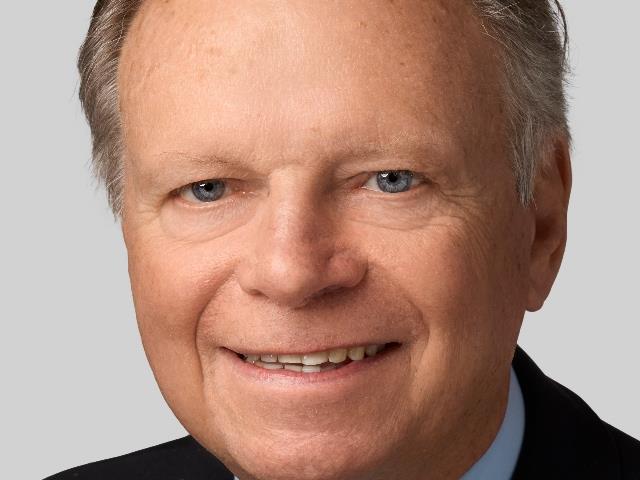
Mark Finley is an international evangelist, television and radio personality, author, teacher, and speaker for the Hope Lives 365 broadcast. He regularly conducts international satellite evangelistic campaigns with tens of thousands in attendance and has spoken in nearly 100 countries. His sermons have been translated into over 50 languages. He has written more than 70 books on Christian living, Bible doctrines, and the prophecies of Daniel and Revelation.Pastor Finley is a faithful student of scripture and proclaimer of Bible truth. He profoundly believes that the Bible is the inspired word of God and provides answers for the deepest questions of life today. His sincerity and love for people shine through each presentation. He and his wife Ernestine have teamed up in Christian ministry for over fifty years. She is known worldwide for teaching Natural Lifestyle Cooking. Continue their Today the Finley’s continue their worldwide ministry at the Living Hope School of Evangelism in Haymarket, Va. and also conduct a Retreat Center for pastors from throughout North America.
Contact HopeLives365 with Mark Finley
Phone:
1-855-888-4673


