How to Support Your Teen's Mental Health – I
Ministries > Focus on the Family with Jim Daly

When your teen is struggling emotionally, knowing how to help can feel overwhelming. Counselor Michelle Nietert shares from her own journey as a mom. You'll discover hope for helping your teen navigate anxiety and uncertainty. And you'll hear how to encourage your teen in their God-given identity.
John Fuller: Next year marks 50 years of ministry for Focus on the Family, encouraging families and helping them thrive in Christ every day. How has God used Focus on the Family to strengthen your marriage, guide you in your parenting, restore a relationship, or bring hope in a difficult season? We want to hear your story. Call now and share how Focus on the Family has made an impact in your life. You'll find the link at focusonthefamily.com/broadcast.
Announcer (Female): This program is sponsored by Focus on the Family, helping families thrive in Christ for more than 40 years.
John Fuller: This is John Fuller, and please remember to let us know how you're listening to these programs on a podcast, app, or website.
Michelle Nietert: I think the two things you look at with your kids is intensity and frequency. How often are they struggling and how bad is the struggle? But let me say this: if your kids are asking for help, get them help and get them the right help.
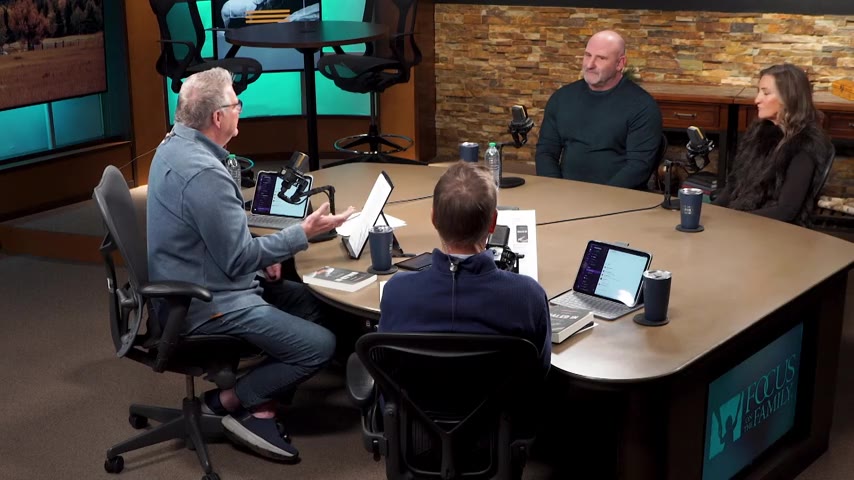
John Fuller: When you think about your teenager, what comes to mind? Confidence or maybe confusion, peace or pressure? Maybe it's a little bit of everything. It seems that those years are marked by lots of everything. Today on Focus on the Family with Jim Daly, we're going to have an honest conversation about teen mental health and about how you can help your young adult to navigate things like anxiety, loneliness, and more. I'm John Fuller.
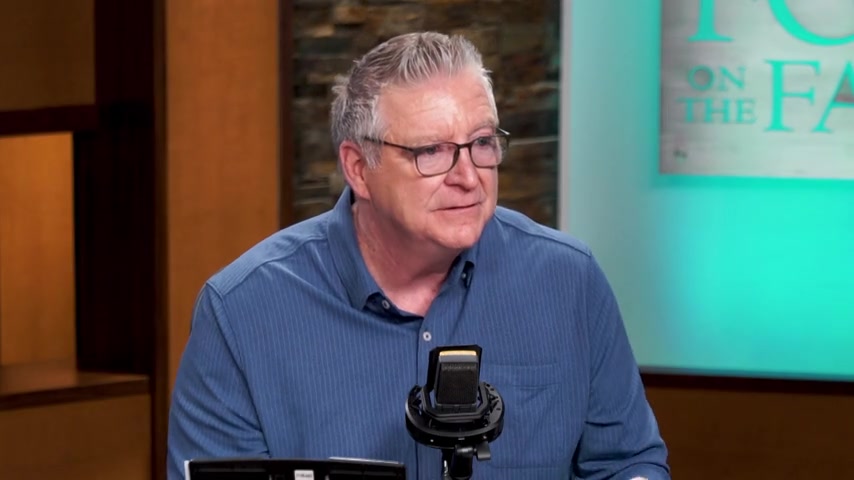
Jim Daly: I want to say thanks to the viewers and listeners for tipping in and spending time with us today. I think today's topic is going to be relevant to parents who are worried or concerned about where their teens and twenty-somethings are at because this culture is really at their throat. No matter what it is, it can be too much screen time, it can be whatever. We're going to discuss ways to re-engage with your teen and help, particularly today, help your teen girl with issues that she's facing about identity and body consciousness and all those things. I think it's going to be really important to give parents a piece of mind that you can get through this.
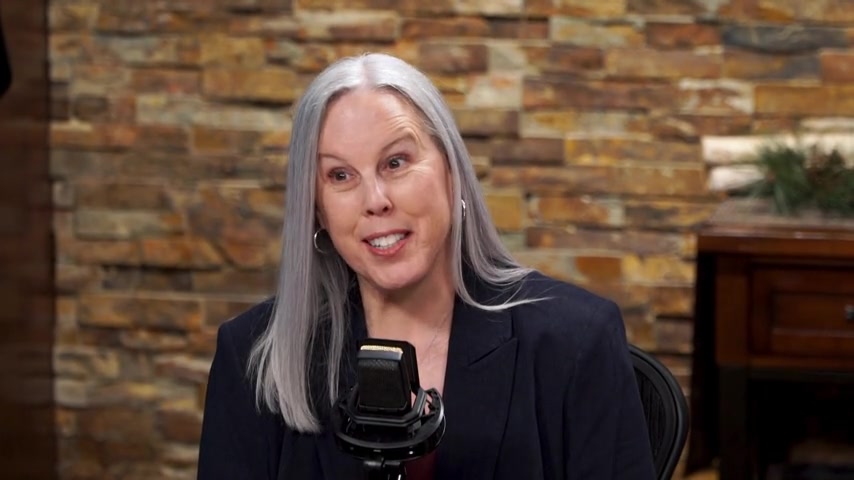
John Fuller: Michelle Nietert is with us. She's always a favorite when she's here in the studio with us. She's a professional counselor, author, speaker, wife, and mom of two. She has a podcast called Raising Mentally Healthy Kids. Check that out. She's also got a great devotional called Strong and Secure: 100 Devotions for Young Women.
Jim Daly: Michelle, welcome back to Focus on the Family.
Michelle Nietert: Thanks for having me back again.
Jim Daly: It's good to have you. I was going to use the scripture 2 Timothy 1:7. I've used this as a parent. It says, "For God has not given us a spirit of fear, but of power, love and a sound mind." That is truth. How come as parents sometimes we struggle to believe that?
Michelle Nietert: I think because we're looking at the external circumstances around us. If we just emotionally react just like our kids and our teens to those external circumstances, the enemy's going to take our focus and just create in us a lot of not only emotion in our hearts, but thoughts in our minds about the future and things that we may even predict that aren't even going to happen. On top of that, then our bodies are going to react. We're going to feel that in our gut. Just like our kids, we're going to feel that tightness in our chest. We're going to feel like we don't. Then sometimes it's going to, like I did yesterday, bubble up in not such a good way sometimes when the pressure gets too big on us if we don't manage it well.
Jim Daly: Often we kick around the terms mental health and emotional health. From a clinical perspective, is there a difference? Are we saying the same thing when we say mental health or emotional health?
Michelle Nietert: I think it's similar for sure. Really what I'm looking at as a Christian counselor, I'm looking at holistic health. At our counseling center, I've trained our 80 counselors that have come through us on a bio-psycho-social-spiritual model. I think it's the renewing of your mind, and that is repeating that scripture and maybe repeating other scriptures. When I get stuck, and I got stuck this weekend pretty hard with some grief, the Lord's Prayer comes to my mind. I need that part, "Thy will be done on earth as it is in heaven." I think even the memorization of scripture where I don't have to go find it. This morning while I was getting ready, I'm not a good sitter. I want to encourage you if you have a neurodiverse kid that doesn't sit very well, sometimes we really want them to read the scripture. I listen to the scripture a lot. I was listening to Psalm this morning and that was helping me with that. Those of us who are really tackling this well, we're helping people with breathing and exercise and things that help their bodies. I think we're helping them be in community. I think we're helping them with the mind piece. The emotional piece, the key to that, especially for this generation, is emotions need to be on the bus, but they cannot run the bus. I was working with this beautiful teenage girl recently, and she is created very rare but they are just all emotion. They can wake up one day and be like a girl on her cycle. If moms are going to listen to this, this is real and that's what they deal with. She's like that on any day because that's how she's wired. The thing that she said I've helped her the most to realize is sometimes that's just her emotions talking and that's not truth. She's got to separate that out for that day so she doesn't do something like try to harm herself or think about dying or think about starving herself. We're in a critical mass with her and it's super important that a clinician do that work and give her some coping skills.
Jim Daly: One thing I often ask psychologists and psychiatrists who are Christians is that balance. Some people watching or listening are saying you talk about personality profiles, but God does organize how human beings behave. It's in His creation. That's why it's so manageable in that we can create these quick simple 10-minute quizzes that give you an insight as to how you tick because God has put the pattern in humanity. It's not something to walk away from. It's something to help better understand how God creates us.
Michelle Nietert: I agree, and not only that, it doesn't lock us in a box. My son won't take it. He won't take the quiz. He's being forced to in an organization, but he's refused because he said, "I don't want to be locked in a box." I've told him this doesn't lock you in a box. This helps me understand how you work so I can parent you better. At the same time, I understand the gifts of the Spirit and I understand spiritual gifts, and the Holy Spirit can manifest anything in you at any time, and I'm trusting God to do that too in your life. I think it's a merger of both.
Jim Daly: You often say mentally healthy parents raise mentally healthy kids. I'm thinking of the teenage years. Our boys are now in their 20s, but can a parent truly become mentally healthy during the raising of teenagers? It seems a contradiction.
Michelle Nietert: I think it's essential. It may be contradictory, but I think it's really essential to a parent to have done their own work. I talked about this last time I was here with my dad, that I was raised by a father who loved well but had a bad temper. He probably had ADHD and impulsivity and didn't manage that well always in my childhood years. I think if I hadn't worked through that, I could have repeated a lot of those generational patterns. I'm experiencing a really interesting sandwich right now because I am having while I am being a grounding source to a kid who just went off to college and a son whose hormones and moods are all over the place. I've never experienced him like this before, and I need to be that grounding source to him and I need to manage my own emotions with him. At the same time, I talked to you guys this morning, I've got a huge spike of emotion going on. I lost my dad three years ago this month. My mother-in-law died two weeks ago. We made a huge decision yesterday that my mother is going to sell the lake house, which are the main good memories of me with my dad because she needs to move closer to us because she is struggling with some health issues. Sometimes we as parents have a lot of emotion going on ourselves, and some mental health issues can come out of that. Especially, I'm very fortunate there's not a lot of sibling conflict with me. My mother is the person who I always call saint. She loved my father well even though he was difficult, and she really loved us kids well. We want to honor her at this time, but I am riding waves of grief and sometimes, like yesterday, I will confess that grief came out with severe irritation with my husband. He actually just offered to get my suitcase, but I thought he was rushing me. I just said, "I will do it in a minute." Then I came back to him and I said, "I'm sorry. I'm just really there's so much emotion in with me right now. This was not about your help and you're right, you had great intentions and I took it the wrong way." I think we have to do the work. I will tell you this in this same 24 hours: I have talked to a new friend who's in her 60s, I have reached out to my Christian coach to pray with me, my sister and I had a heart-wrenching conversation where she confessed, "I cried too today. Mom is starting to fade and it's hard for me to come to grips with that and still deal with the demands of our work life and ministry life." She's with Lifeway and the kids, and it's just hard. I think we as parents have to do our work, grieve. I don't think we hide it all from our kids either. I think we model it well for them. I hope I am because I hope they're going to care for me as well as I want to care for my mom right now.
Jim Daly: You've got both sides of that working. When I was going through the book, I was looking at that factor that sometimes biochemical issues enter in. You could be an emotionally stable parent and your child may have things that you've not dealt with that they're dealing with, whether it's anxiety, depression, and whether that's linked to biochemical issues, etc. There's not a formulaic approach. I'll ask this question in a way that I normally wouldn't ask it because I don't believe there is a way to make sure something happens, make sure an outcome occurs. But parents can get so desperate that they ask the question: in Strong and Secure, you're leaning in toward how can we as parents make sure our kids are emotionally and mentally strong?
Michelle Nietert: I'm going to give you the best thing I know in this area. There's predictive ability, but no certainty of outcome. Here's what I will tell you: the one thing I have poured my life into in the midst of this work is making sure my kids really knew God and loved Him as a Father because that's why I wrote this book. In college, it changed my life to know God as Father and to know that I get to take Him anywhere I go. He was with me in the hotel this morning. He was with me on the plane. He's with my daughter when she's at school while she's grieving. That is what I'll never forget. The conflict we had one time when she said, "I don't want you to be the boss of me." I said, "I don't want to be the boss of you. As soon as God is the boss of you, I'm out." What that allowed her to do is begin to seek the fatherhood of the heart of God. If she has experienced that in her life—the things that we talk about in this book, His presence, His peace, His provision, His protection, His healing—it's not going to protect them from ever having a panic attack, but I think it's going to see them through. One hour out of 168 hours a week is not discipleship for your child. You can't leave them in the church with the youth minister for an hour and you can't leave them in Sunday school and expect them to catch it. You've got to spend time like it talks about, writing the word on their hearts, talking about it in the car. I had a great conversation with my son yesterday or the day before when I was driving him to school. I just said, "How are you doing?" He said, "I'm doing okay." I said, "How was the retreat?" He'd been on a Christian retreat. He said it was good. We've got to be careful because we'll let that go sometimes. I said, "What was good about it?" He said, "I just really felt like God spoke to me in these ways." I was like, "That's amazing." This is what I think parents need to do more of: catch God at work in your kids. I hear a lot, "Catch your kids doing good," but catch God at work in your kids. I said to him, "I love the way that God is working in and through you." Yesterday morning I got to watch my daughter on a telebroadcast of a church of 1,600 lead worship. I love watching her sing about surrendering her life to the Lord, even if it is in front of a camera. I see the authenticity in her heart and the surrender as she sings that I am available. If you can get that in your kids, it's going to see them through.
John Fuller: Today on Focus on the Family, Michelle Nietert is our guest. We're talking about really the heart behind this book. It's really a wonderful resource for you to work through with your young adult daughter. It's called Strong and Secure: 100 Devotions for Young Women. You heard from Michelle there about what she wants to see you be able to do with this book and your child. Get a copy of the book from us here at focusonthefamily.com/broadcast. Of course here at Focus on the Family, we have a wonderful counseling team as well. Michelle, as a parent, how do I know if I need to seek out a professional for advising me on anxiety and depression I'm watching my child go through, but I really can't help her pull out of it?
Michelle Nietert: I'm very grateful for your counseling team. I'm part of your referral network and working with a couple right now in a couples' intensive situation. I'm grateful for them, and I'm grateful sometimes when I encounter people while I'm speaking that I can refer them in different states and know that I'm getting a clinician who also has a dedication to faith. I think that's real important in this culture. As you're seeking clinical advice, make sure that faith piece is a part of it or you might not get some advice that I would endorse these days. Things are changing in my professional life that way and people have some maybe poor counsel for you. I go back to what we talked about a little bit with God I feel sad and God I feel scared and managing your emojis. I think the two things you look at with your kids is intensity and frequency. How often are they struggling and how bad is the struggle? But let me say this: if your kids are asking for help, get them help and get them the right help. That may mean you need to do a parent consult first with someone. I offer them all over the country to help you find the right mental health professional. My own sister, who is Lifeway Bible study teacher, none of our kids are perfect. All of our kids have struggled. She was the sixth person in a week who said, "How do you get your college kid to go to a counselor when you think they need to?" I'm like, "Can you get on the podcast with me and let me answer this question with you instead of personally? Because I've said it six times this week and I'd like to record it." We actually very vulnerably recorded that together on the podcast. I think it's a process of if your kids are asking for help, it's easy. But let me tell you this: I'm in these groups and it's kind of scary. They're called Dorm Room Moms. They were kind of about decorating the dorm rooms at first, but now they're about where the kids are. There are kids who are failing, there are kids who are wanting to quit their sports that have full rides, there are kids who are drinking too much, there are kids who some new boyfriend or girlfriend has come into their lives and they're walking away from their faith or their values. Our kids, I think where you put your kids in college is important too. I'm going to say something publicly that I may regret, but we have been very honest with our kids. We are the ones who are making that investment because they can't afford it on their own. We will only invest not necessarily in a Christian university, but in universities that offer opportunities for spiritual growth alongside their academic vocational preparation. It's very important to us. My son who wants to be a chemical engineer, there's not a Christian university in the country, small one, that offers that degree. But we're looking at schools where there's a strong crew or there's a strong campus ministry, worship teams, something. Then you've got to figure out a way to help your kids plug in. For example, when my husband and I and my son came with us dropped my daughter off at college, we stayed an extra night. It cost us in a hotel room, but we went to church with her on Sunday so that she would go to church, a church somewhere in this new town she was living in. She would not be by herself having to do that. We could look at college adults. I think we as parents are going to have to get creative about how we continue to disciple our kids as they're off at school.
Jim Daly: In addition to that, I think to answer your question, John, how I would say that is if you have doubts, move. If something's in your heart saying something's not right, act on that. I just think if we're waiting for our child to express it even though we may be sensing it, we may be a step behind.
Michelle Nietert: Can I also say this? I know that this is different than what a lot of us thought. Sometimes it's okay to move your kid too. If they're begging to come home, you've got to examine it. You don't want to have somebody who quits too soon. But none of us gets a magic ball to see the future. Sometimes we feel the Lord has led us one way but the circumstances are too much. Get them help there on the campus. Find a ministry, find a Christian counselor where they're at. If they're at a Christian school, most of those schools have amazing university Christian counselors. They're free to these kids. I met the ones at my daughter's school and checked them out a little bit, I have to admit. It's so important that we help our kids plug into godly support. How we do it the best is we model that. That's what I'm most worried about. A lot of parents aren't modeling that. They're not seeking that out. If they're too busy to do it, don't expect your kids to do what you're not doing yourself. My kids see me say, "I have another meeting, it's with my coach and I'm going to go cry my eyes out. I'll be back in an hour." My kids see my husband in a small men's group every other week where he jokes about his Coke addiction, and that's Coca-Cola. He has a little soda migraine issue that he gets into. Sure enough when his mom died, he started drinking Coca-Cola again. But they see him struggle and get support and have men pray for him and him mentor other men. It's real important that our kids catch a vision for this life. Honestly, I know that you're saying what does this have to do with mental health? It has everything to do with mental health. The biggest struggle these kids have, the research says and the statistics are scary, is loneliness and isolation. As we demonstrate that we're in community, it inspires our kids to be in community.
Jim Daly: In that regard, noticing the spiritual battle that we're in for what it is. 2 Timothy says, "God has not given us a spirit of fear, but of power, love and a sound mind." The enemy works directly against that. That is why I think we're seeing the opposites: anxiety, depression, loneliness. These would be the attributes of the deceiver. We've seen links between social media use and teen anxiety. We've had many guests come on and talk about this. The bottom line question is how do we know what is okay and what's not when it comes to usage? That's every parent's battle. How much time is too much time? We're looking for someone to say one hour a day, two hours a day, whatever that answer's going to be. How have you addressed that and what do you see in the research?
Michelle Nietert: I am very different than your average guest because I have not withheld that from my kids in the way a lot of them have. I've done it partially because they have a working mom and a traveling dad. With their extracurricular activities, I have wanted communication with them. I have locked them down. They do not have a phone that has access to everything. As a clinician who treats issues with teenagers, my biggest nightmare was the day boys got porn in their pockets on a phone because we see so much of that. But let me say this: I think it's like anything else. When you ride a bike, you have training wheels and then you start riding. We need to help our kids with electronic devices do it with training wheels under our roofs well. What I look at is the emotional regulation piece of this. My son with the video game...
Related Episodes
Man Enough to Love Well
Monday, September 28
Accepting What You Can’t Control
Saturday, September 26
Praying for Your Marriage is Essential – II
Friday, September 25
Related Videos
About Focus on the Family
We want to help your family thrive! The Focus on the Family program offers real-life, Bible-based insights for everyday families. Help for marriage and parenting from families who are in the trenches with you. Focus on the Family is hosted by Jim Daly and John Fuller.About Jim Daly
Jim Daly
Jim Daly is President of Focus on the Family. His personal story from orphan to head of an international Christian organization dedicated to helping families thrive demonstrates — as he says — "that no matter how torn up the road has already been, or how pothole-infested it may look ahead, nothing — nothing — is impossible for God."
Daly is author of two books, Finding Home and Stronger. He is also a regular panelist for The Washington Post/Newsweek blog “On Faith.”
Keep up with Daly at www.JimDalyBlog.com.
John Fuller
John Fuller is vice president of Focus on the Family's Audio and New Media division, leading the team that creates and produces more than a dozen different audio programs.
John joined Focus on the Family in 1991 and began co-hosting the daily Focus on the Family radio program in 2001.
John also serves on the board of the National Religious Broadcasters.
Contact Focus on the Family with Jim Daly
Mailing Address
Focus on the Family
8605 Explorer Dr.
Colorado Springs, CO
80920-1051
Toll-free Number
(800) A-FAMILY (232-6459)


