95% of parents say nature is essential for kids. So why are families stuck inside?
Lifestyle

Audio By Carbonatix
11:00 AM on Thursday, April 30
By Alex Velazquez for Westgate Resorts, Stacker

95% of parents say nature is essential for kids. So why are families stuck inside?
American parents aren't confused about what their kids need. They're just not doing it.
A new national survey from Westgate Resorts found that 95% of U.S. parents believe nature and outdoor experiences are a nonnegotiable part of childhood development. But that's not the surprising number. What's surprising is how little it translates into action. Only about a third of those same families actually get outside together multiple times a week, and nearly 13% are down to once a month or less.
The study surveyed 1,000 American parents in March 2026 across a range of demographics, and the picture it paints is one of a country where intention and behavior have almost nothing to do with each other.
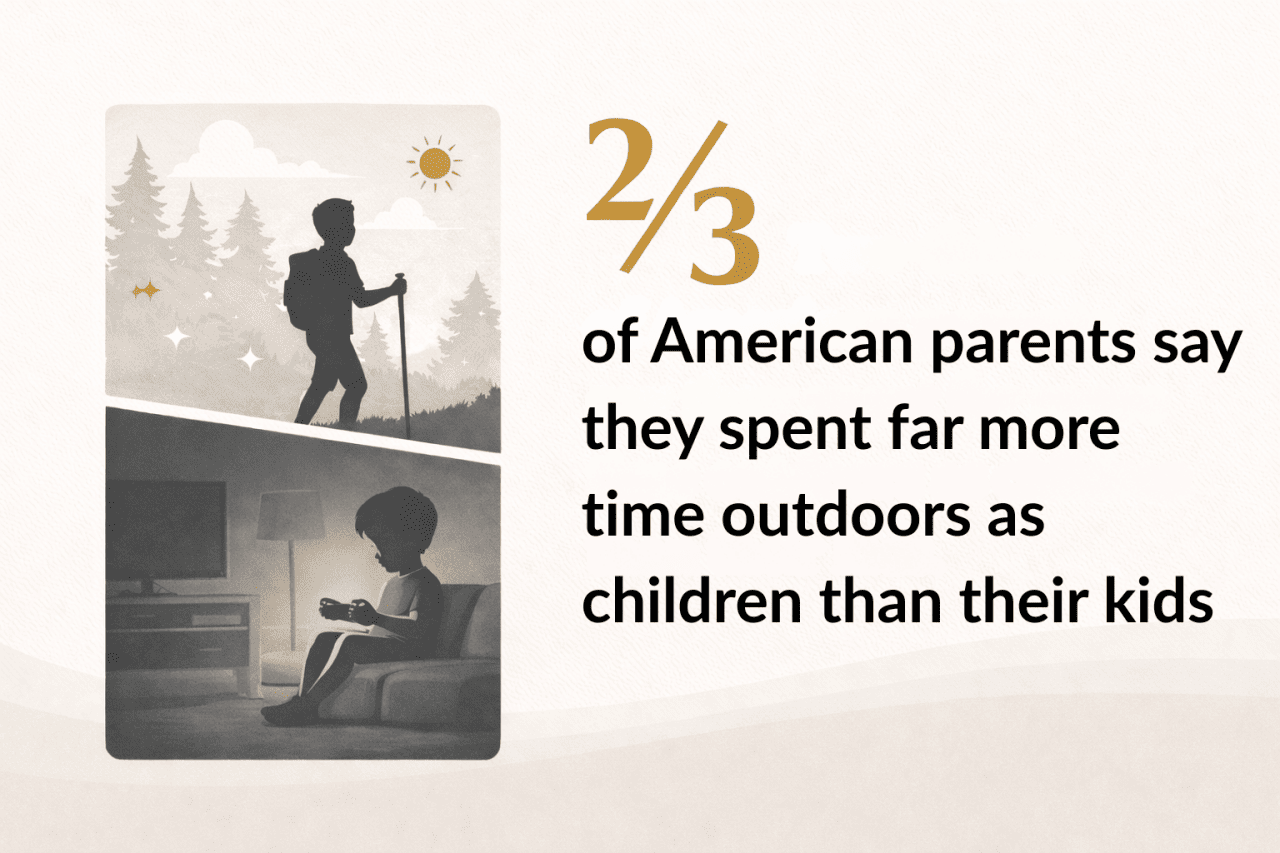
Two-Thirds of Parents Had a Completely Different Childhood
This one won't shock anyone who's spent five minutes on a parenting forum. There are whole online movements dedicated to recreating a "90s childhood" for kids today, fueled by parents who remember riding bikes until the streetlights came on, drinking from garden hoses, and not coming home until dinner. That nostalgia isn't just vibes. The data backs it up.
Two in 3 parents (66.5%) say they spent significantly more time outside as children than their own kids do now. Among Gen X parents, that jumps to 75.1%. Among Baby Boomers, it's 78.6%. Only 1.5% of parents say their children actually spend more time outdoors than they did growing up.
The shift isn't really a mystery. Kids’ free time is taken up by structured activities and school pressure. And the entire entertainment economy is engineered to keep eyeballs indoors. What makes this stat sting, though, is that the parents who lived an outdoor childhood are the same ones who can't figure out how to recreate it.
Kids Are Spending More Time on Screens Than Most Adults Spend at Work
At least 1 in 4 (27.1%) American children log five or more hours of recreational screen time on a typical weekday. Within that group, 11.8% are clocking seven-plus hours. To be blunt: A kid racking up seven hours of daily screen time is spending more time in front of a device than the average American worker spends at their desk.
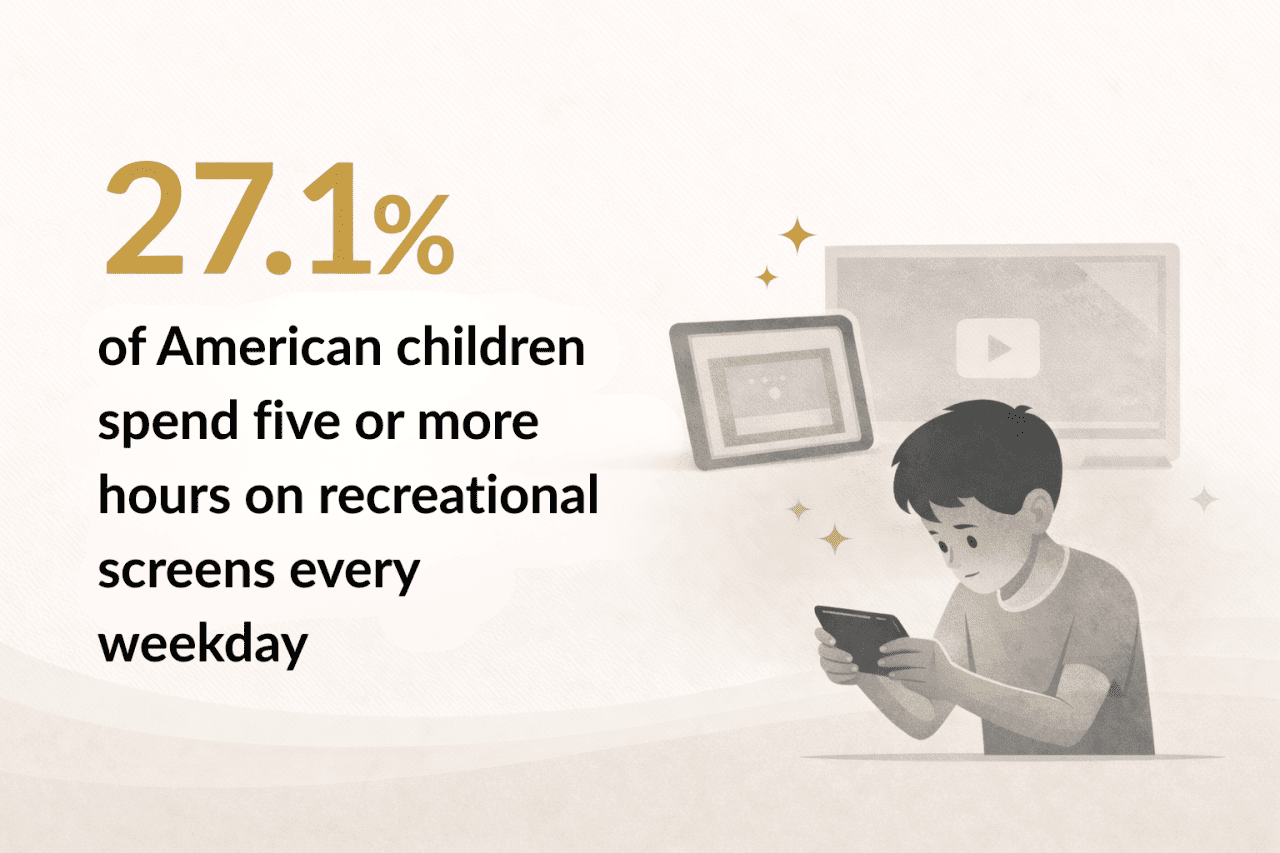
And only 6.2% of children get less than one hour of nonschool screen time per day.
This isn't just Westgate Resorts finding living in isolation, either. A 2025 Common Sense Media report found that screens have become embedded in children's daily routines from birth. The Centers for Disease Control and Prevention linked four or more daily hours of nonschool screen time to worse outcomes in physical activity, sleep, weight, and mental health. Screens aren't just competing with the outdoors. They've already won most of the available hours.
Predictably, this creates tension at home. 53.5% of families argue about screen time at least a few times a month. In the Northeast, 21.7% of families fight about it every week. The screen time debate isn't abstract for these households. It's a recurring argument at the dinner table.
Parents Feel Guilty, And It's Changing How They Book Vacations.
Nearly 3 in 5 (57.5%) parents say they feel guilty or frustrated about their children's lack of outdoor time; 30.3% call it straight-up guilt. Another 27.4% describe frustration because they want to fix it but can't. Only 14.3% of parents say they're satisfied with how much time their family spends outside.
And that guilt appears to be showing up in how families plan their vacations.
Nearly 7 in 10 (69.6%) parents have booked a vacation specifically to make up for the nature their kids aren't getting at home. Nearly a third have done it more than once. What's emerging here is a new category of family travel: the guilt-driven outdoor trip. These trips can range from weekend camping getaways to adventure theme parks to beach vacations, but they're all booked by parents who feel like they owe their kids something that daily life keeps failing to deliver.
The pattern is strongest among younger parents. About 2 in 5 (37.9%) Gen Z parents have actually skipped a vacation entirely because they couldn't find a family-friendly outdoor destination. For Gen X, that drops to 26.4%. Younger families want the outdoor trip but face the widest gap between what they want and what's available.
The Biggest Barriers Are Time and Money, Not Motivation
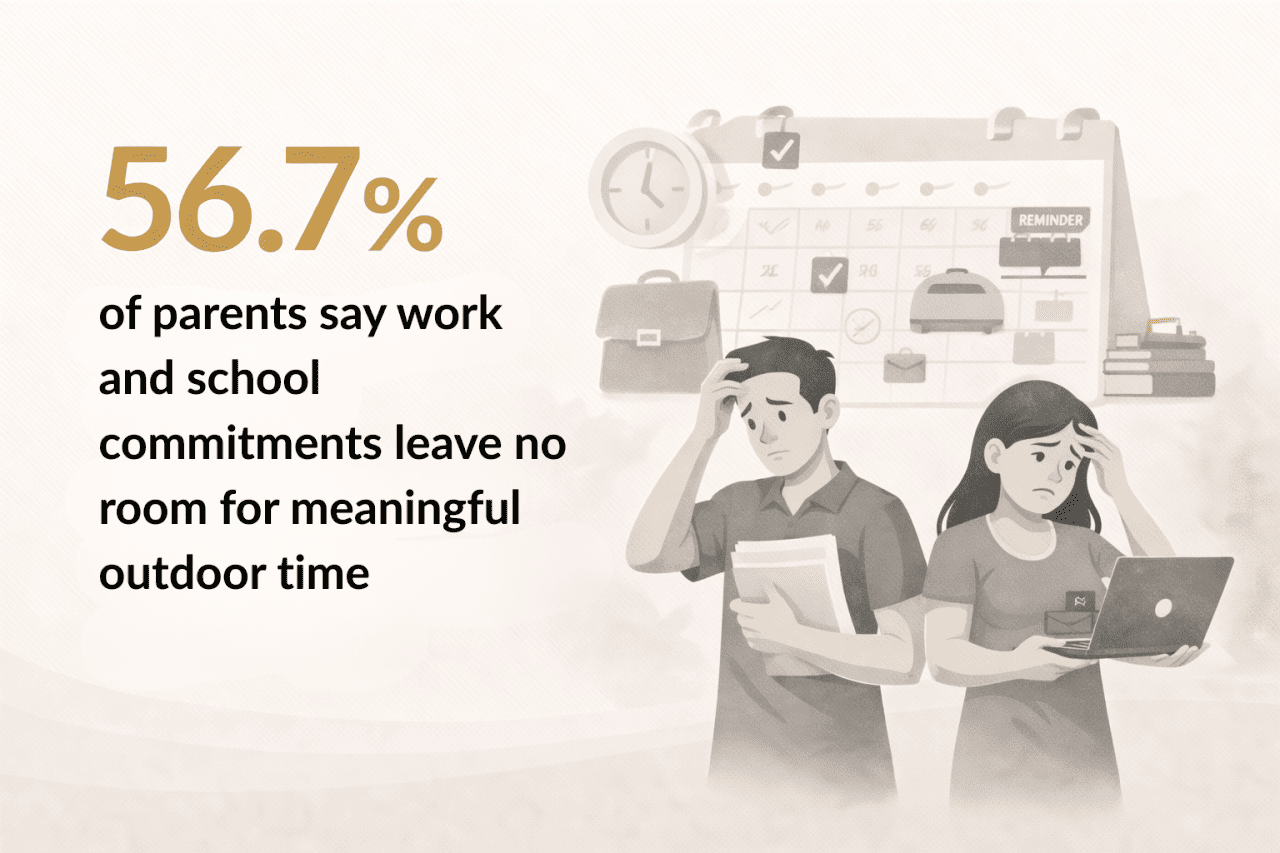
Nearly 3 in 5 (56.7%) parents say work and school schedules are the number one reason their families don't get outside more. And it makes sense that this pressure scales with income. Among households earning $100,000 to $249,000, 63.6% cite packed schedules as the top barrier. These are the families most likely to have kids in travel sports, music lessons, tutoring, and a dozen other structured activities that eat up every free afternoon and weekend.
Then there's cost. More than half (52.9%) of parents say the biggest motivator to spend more time outside would be affordable options that don't require expensive gear. For families earning $25,000 to $49,000, that figure hits 59.7%. Nature is supposed to be free, but between equipment costs, transportation, park fees, and the sheer time investment of planning an outdoor day, it doesn't feel free at all for a lot of families.
And layered underneath all of this is a knowledge gap that nobody really talks about. One in 4 Gen Z parents say they don't even know where to take their kids outdoors or what to do once they get there. That's more than three times the rate among Gen X parents. A generation that largely grew up indoors is now raising the next one without a reference point for outdoor life.
The ‘Want-to-Be Outdoorsy’ Family
Maybe the most telling number in the entire survey: 45.4% of American parents describe their family as "want-to-be outdoorsy." That's the single largest self-identification category, outpacing families who actually consider themselves outdoorsy at 28.1%. Fewer than 4% say they're indoor people and perfectly fine with it.
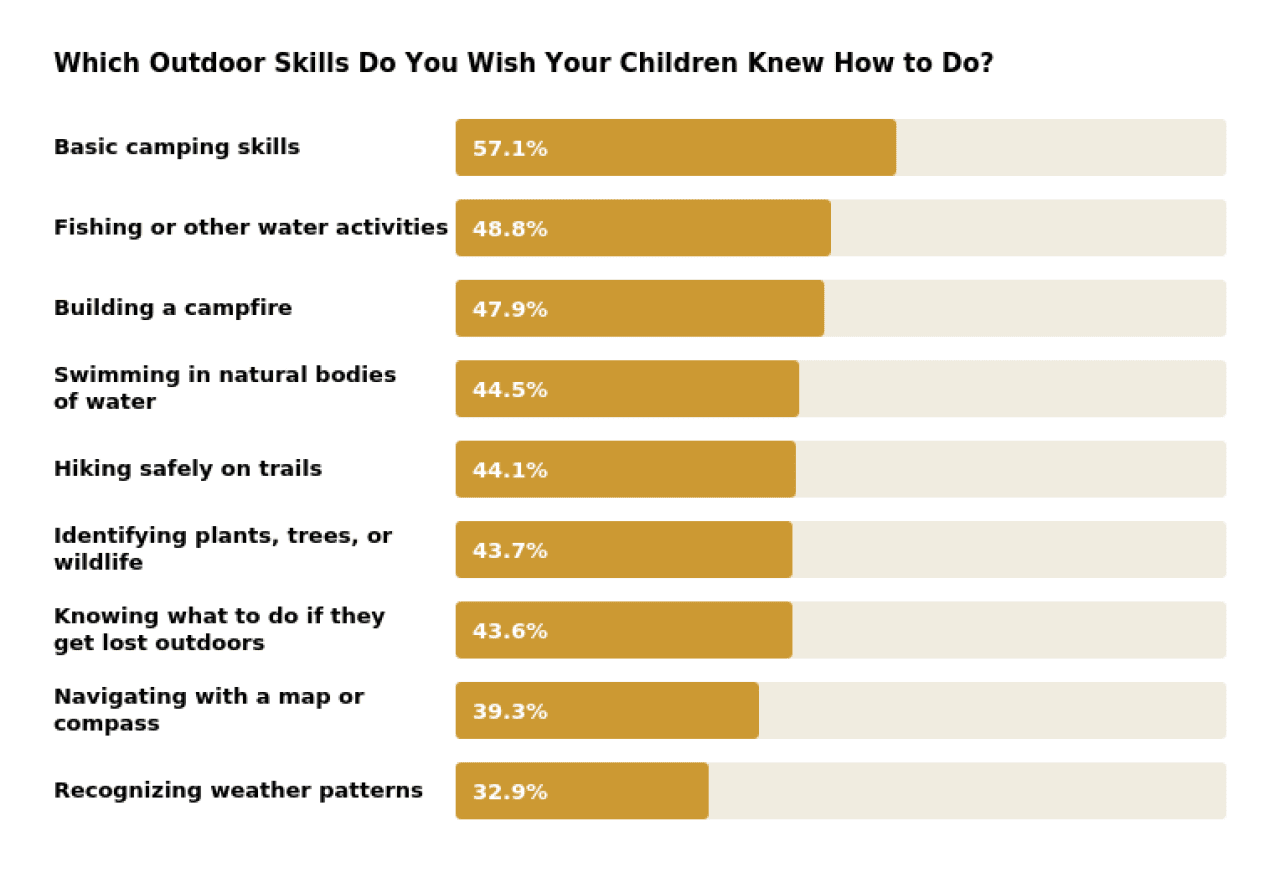
So the problem isn't that families have given up on the outdoors. It's that the outdoors has become something aspirational rather than automatic. Time, money, logistics, and a built world that defaults to indoor living have created a gap between who families think they are and how they actually spend their days.
But the data makes one thing pretty clear: families know exactly what they want. They want trails within walking distance. They want affordable options without specialized gear. They want destinations that shrink the distance between the front door and the forest. Whether anyone's building for that demand is a different question.
Methodology
The survey was conducted via Pollfish, targeting 1,000 U.S. adults with children. Respondents answered questions covering outdoor habits, screen time, barriers to nature exposure, vacation decisions, and attitudes about childhood development. Results were broken down by generation, household income, education level, gender, and region.
This story was produced by Westgate Resorts and reviewed and distributed by Stacker.


